
- ALIZEH
- Baroque
- Charizma
- Charizma Signora Unstitched Palachi Velvet
- Charizma Signora Premium Velvet 2025
- Charizma C-Prints Linen Collection | Winter 25
- CHARIZMA POSHIMA V1 2025 Winter Collection
- Charizma Combination Unstitched Linen Collection Vol 1 2025
- Charizma Dastan-e-Jashan Premium Chiffon Vol 01 ’25
- Charizma Diamond Dust Premium Chiffon
- Elaf
- EshaIsha
- Hadiyas
- Hussain Rehar
- Iznik
- Johra
- KAHF
- Maria B
- Nureh
- Qalamkar
- Ramsha
- Riaz Arts
- Rang Rasiya
- Saadia Asad
- Sardinia
- Sobia Nazir
- Zara Shahjahan
- Zarif
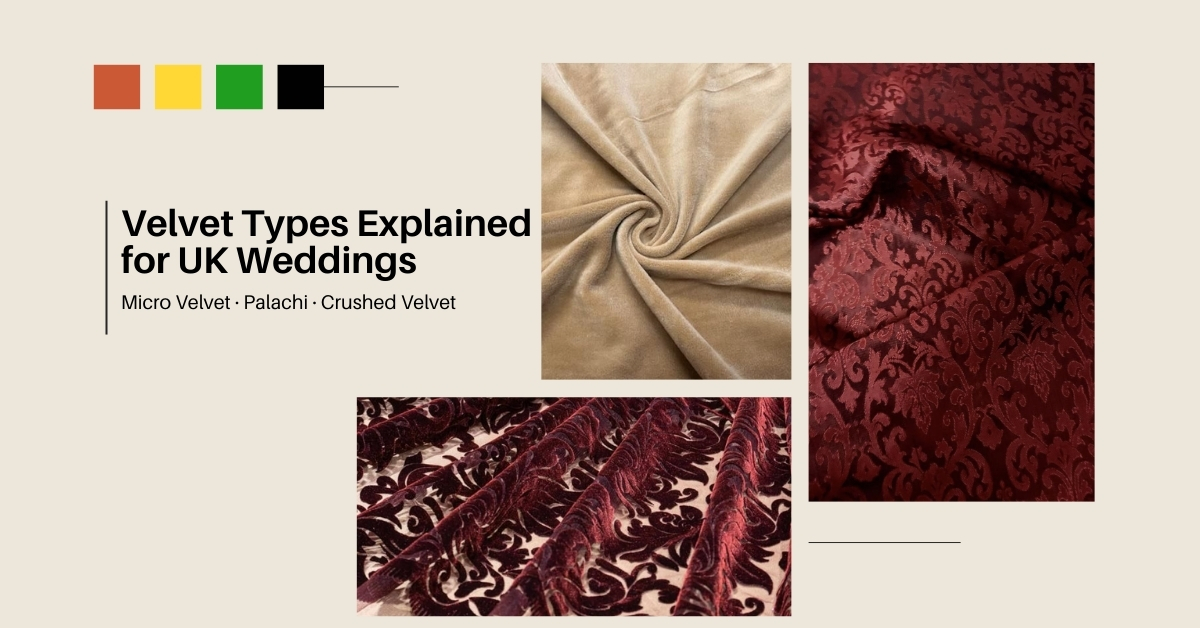
Velvet Types Explained: Micro Velvet, Palachi & Crushed Velvet for UK Weddings
Not all velvet fabrics perform the same at UK wedding venues. Many buyers assume velvet is a single fabric choice, but in reality, velvet varies by density, surface finish, and structural strength. These differences directly affect comfort, warmth, and embroidery support.
For UK winter weddings, where events often move between heated indoor halls and colder outdoor spaces, choosing the wrong velvet type can lead to overheating, discomfort, or outfits that lose shape. This guide explains how micro velvet, palachi velvet, and crushed velvet behave in real wedding conditions, helping you choose the right fabric based on venue and event needs.
Micro Velvet
Light • Medium warmth
Best for:
Indoor venues, long wear
Palachi Velvet
Heavy • High warmth
Best for:
Brides, receptions
Crushed Velvet
Varies • Low–Medium warmth
Best for:
Fashion-focused events
Why Velvet Is Popular for UK Winter Weddings
Velvet is chosen for UK winter weddings primarily because of its thermal performance. The fabric’s dense pile traps warmth, reducing the need for heavy layering during cold weather events.
Another reason is structural reliability. Pakistani wedding outfits often carry dense embroidery, and velvet provides a stable base that prevents sagging over long ceremonies. This is especially important for receptions and Walima events that last several hours.
Velvet also performs consistently under indoor artificial lighting, which is common in UK wedding venues. Unlike shiny fabrics that reflect unevenly, velvet absorbs light evenly, producing deeper and more controlled colour tones.
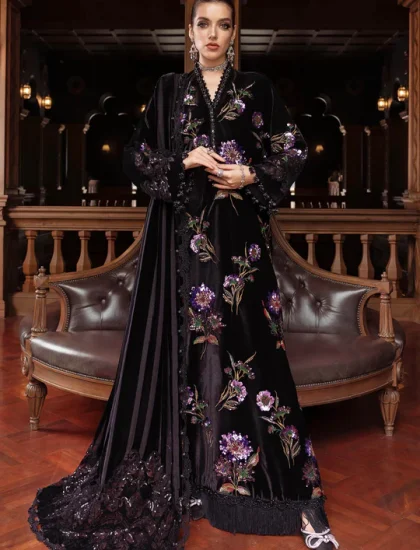
Micro Velvet – Lightweight Velvet for Indoor UK Weddings
Micro velvet is a finer and lighter variation of velvet with a smoother surface and reduced bulk. It offers a velvet appearance without the heaviness associated with traditional winter velvet.
This fabric works best in fully heated indoor venues, where warmth is controlled and prolonged outdoor exposure is limited. Micro velvet allows better airflow and movement, making it suitable for long indoor events.
Best For:
- Heated hotel halls and community centres
- Bridesmaids and wedding guests
- Light to moderate embroidery
How it behaves in UK venues:
Comfortable for extended indoor wear
Less insulating during outdoor photography
Relies on good stitching for shape retention
Palachi Velvet – Structured Velvet for Formal Winter Events
Palachi velvet is heavier and more compact than micro velvet. Its tighter weave provides greater insulation and stronger embroidery support, making it a preferred choice for formal winter wedding wear.
This velvet type performs well in mixed venue environments, where guests move between outdoor cold and indoor warmth. Palachi velvet maintains structure even under heavy embroidery, ensuring the outfit remains polished throughout long events.
Best For:
- Brides
- Walima and reception outfits
- Evening winter weddings

How it behaves in UK venues:
Retains warmth during outdoor movement
Maintains embroidery stability over long hours
Performs consistently in colder evening settings
Crushed Velvet – When It Works (and When It Doesn’t)
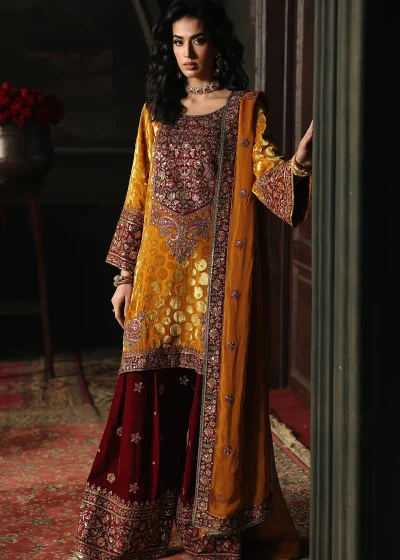
Crushed velvet is created by twisting or pressing the fabric to produce a textured surface. While visually appealing, it behaves differently from structured velvet types.
This fabric lacks the stability required for heavy embroidery and structured silhouettes. In UK wedding settings, crushed velvet often loses shape under weight and prolonged wear.
Best for:
- Short indoor wedding events
- Light fashion-focused outfits
Avoid if:
The outfit includes dense embroidery
The event is long or formal
Outdoor movement is expected
Which Velvet Type Is Best for Your UK Wedding Venue?
Choosing velvet should be based on venue conditions, not trends.
Fully heated indoor venues: Micro velvet or lighter palachi velvet
Indoor + outdoor movement: Palachi velvet
Short daytime events: Micro velvet
Micro decision logic:
If the event involves prolonged sitting, standing, or movement, heavier velvet provides better stability. If the event is stationary and indoors, lighter velvet improves comfort.
How Embroidery Weight Affects Velvet Choice
Embroidery weight directly impacts how velvet performs. Heavier embroidery requires a denser fabric to prevent pulling and distortion.
Matching embroidery weight to velvet type prevents long-term wear issues.
- Micro velvet → light to moderate embroidery
- Palachi velvet → dense embroidery
- Crushed velvet → avoid heavy embroidery
Common Mistakes When Choosing Velvet Fabric
A common mistake is assuming that visual appearance equals performance. Velvet that looks good online may behave poorly in real wedding conditions.
Another issue is choosing crushed velvet for formal wear, where durability and structure are required. Ignoring venue heating and event duration also leads to discomfort later in the day.
Avoiding these mistakes helps ensure the outfit remains wearable, structured, and comfortable throughout the wedding.
Velvet Types Comparison for UK Weddings
| Velvet Type | Weight | Warmth | Embroidery Support | Best For |
|---|---|---|---|---|
| Micro Velvet | Light | Medium | Moderate | Indoor venues, long indoor wear |
| Palachi Velvet | Heavy | High | Excellent | Brides, receptions, formal winter events |
| Crushed Velvet | Varies | Low–Medium | Low | Short fashion-focused indoor events |
Conclusion
Velvet is not a single fabric choice. Micro velvet, palachi velvet, and crushed velvet each serve different purposes depending on venue conditions, event length, and embroidery requirements.
Choosing the correct velvet type helps ensure comfort, durability, and consistent appearance throughout a UK winter wedding. Understanding how velvet behaves in real conditions makes the decision clearer and more reliable.
The next step is to match velvet type with your venue and event needs before selecting designs.
Looking for Velvet Outfits Suitable for UK Winter Weddings?
Explore velvet styles that match your wedding venue and event timing to make a confident, practical choice.
What are the different types of velvet used for UK wedding outfits?
+
The most common velvet types used for UK weddings are micro velvet, palachi velvet, and crushed velvet. Each differs in weight, warmth, and embroidery support, which affects comfort and durability in winter wedding venues.
Which velvet type is best for UK winter weddings?
+
Palachi velvet is generally best for UK winter weddings because it provides higher warmth and strong embroidery support. Micro velvet works well for heated indoor venues, while crushed velvet is less suitable for formal winter events.
Is micro velvet suitable for indoor UK wedding venues?
+
Yes. Micro velvet is suitable for fully heated indoor venues. It is lighter than palachi velvet and offers better comfort for long indoor events, but it provides less insulation during outdoor movement.
Which velvet fabric supports heavy embroidery best?
+
Palachi velvet supports heavy embroidery best due to its dense weave and structural strength. Micro velvet can support light to moderate embroidery, while crushed velvet is not recommended for heavy embellishment.
Does velvet feel too hot in indoor UK wedding venues?
+
Velvet does not automatically feel too hot indoors. Comfort depends on velvet type, lining, and venue heating. Lighter velvet types and breathable linings help maintain comfort throughout the event.
How should I choose the right velvet for my UK wedding venue?
+
Velvet should be chosen based on venue heating and event duration. Heated indoor venues suit lighter velvet, while venues involving outdoor movement or evening events require heavier, structured velvet.