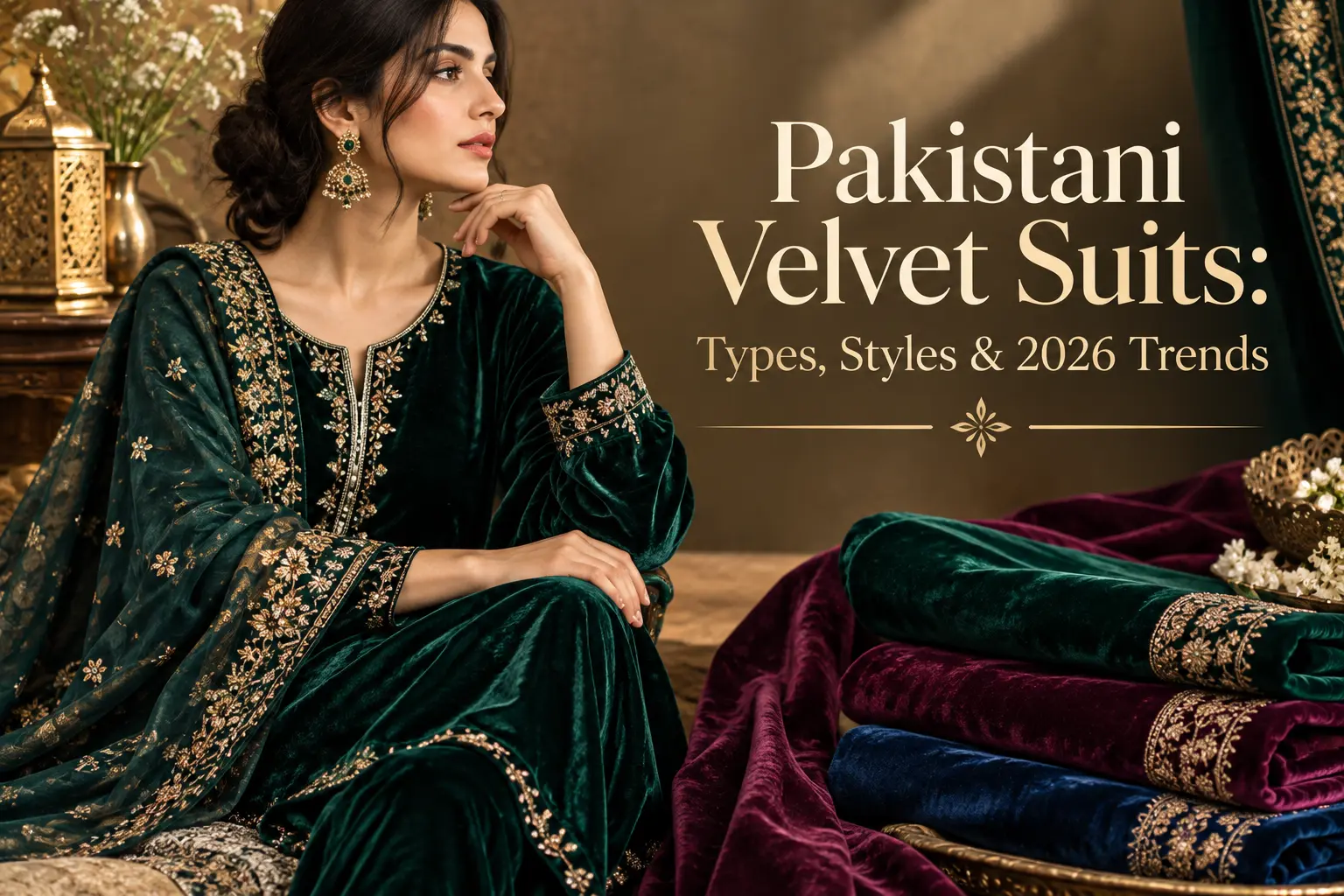
Pakistani Velvet Suits: Types, Styles & 2026 Trends

Pakistani Velvet Suits: Types of velvet, Styles & 2026 Trends

Table of Contents

You’ve got a winter wedding coming up, and everyone keeps telling you to go for velvet. Fair enough; it looks stunning in every photo you’ve seen. But the second you start looking, you hit a wall of names. Crushed, embossed, panne, stretch, silk, 9000, 11000. Nobody tells you what any of it actually means, or which one will actually suit the gharara you’ve got in mind.

This guide sorts it out properly. Every type of velvet used in Pakistani suits, every style you can have it made into, and how to pick the right one without guessing.

Velvet Suit Styles at a Glance

Pakistani velvet suits come in four main looks: flowing frocks and gowns, straight-cut trouser suits, gharara and sharara sets, and shawl suits with an embroidered velvet dupatta. Each one suits a different kind of event, from a formal walima to a casual winter dawat. We’ll go through the fabric first, then the styles, so you can match the two properly.

Types of Velvet Fabric

Not every velvet is the same weight, shine, or price, and that matters more with velvet than with most other fabrics. Get the type wrong and your suit either looks flat in photos or leaves you sweating three songs into the wedding. Here’s what you’re actually choosing between.

Fabric Comparison Table

Velvet Type

Texture

Best For

Warmth

Crushed

Wrinkled, uneven shine

Sharara, Anarkali

Medium

Panne

Flat, high shine

Straight suits, formal cuts

Medium

Embossed

Raised pattern

Bridal, festive pieces

Medium-High

Stretch

Smooth, fitted

Co-ords, fitted trousers

Low-Medium

Embroidered

Base velvet plus threadwork

Bridal, wedding guest

High

Silk-based

Deep sheen, heavier drape

Formal evening wear

High

Polyester-based

Lighter, budget-friendly

Everyday winter wear

Low-Medium


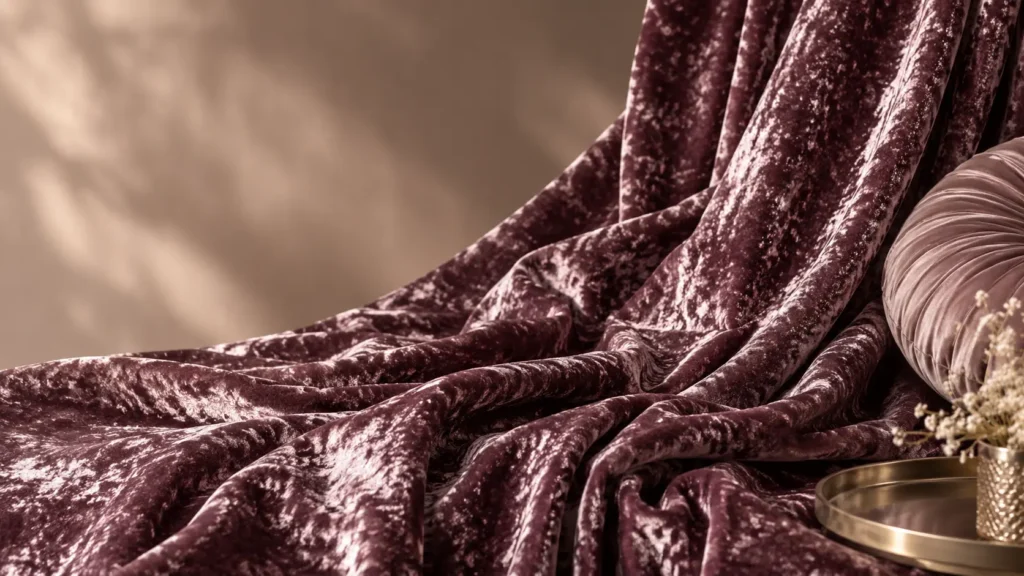
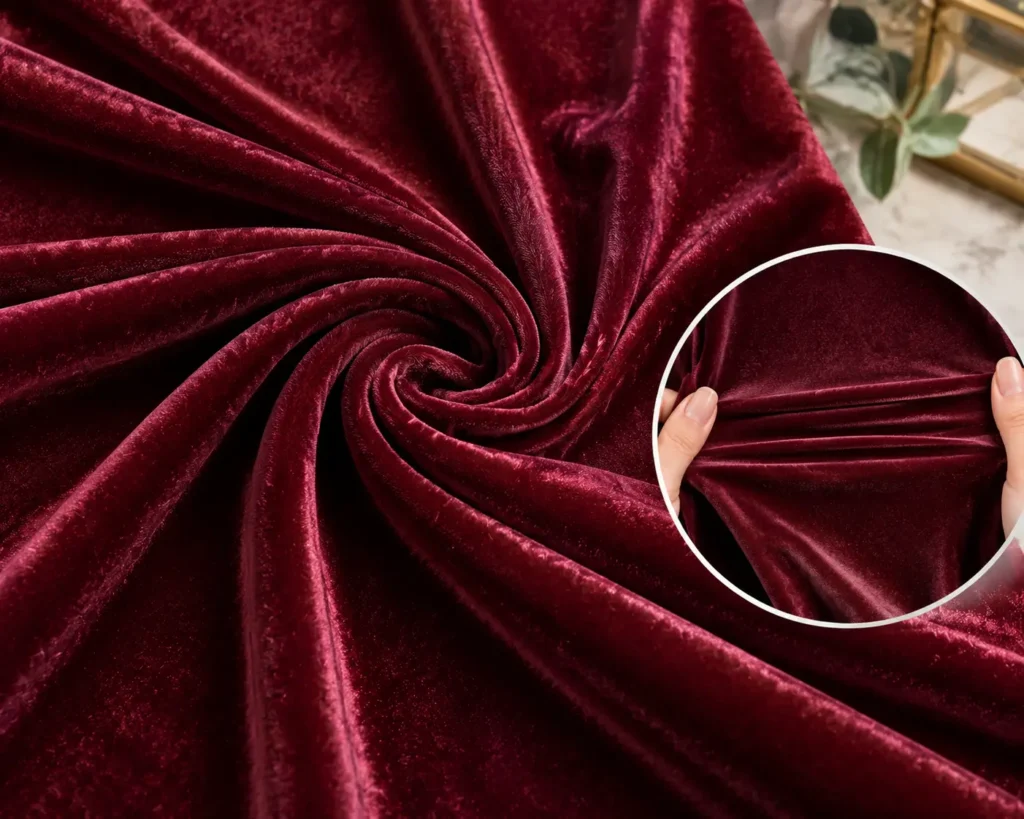
Crushed Velevt

Luxury crushed velvet fabric draped in soft flowing folds, showcasing a rich mauve-purple texture with shimmering highlights and deep shadows.

Crushed velvet gets its uneven, wrinkled look from being twisted while the fabric is still damp during finishing. That’s what makes it catch the light in patches instead of one flat sheen. It works particularly well on a sharara or a flared Anarkali, where the movement of the fabric shows off the texture as you walk.

If you want something with a bit of personality rather than a stiff, formal finish, this is usually the one people point to first.

Panne Velvet

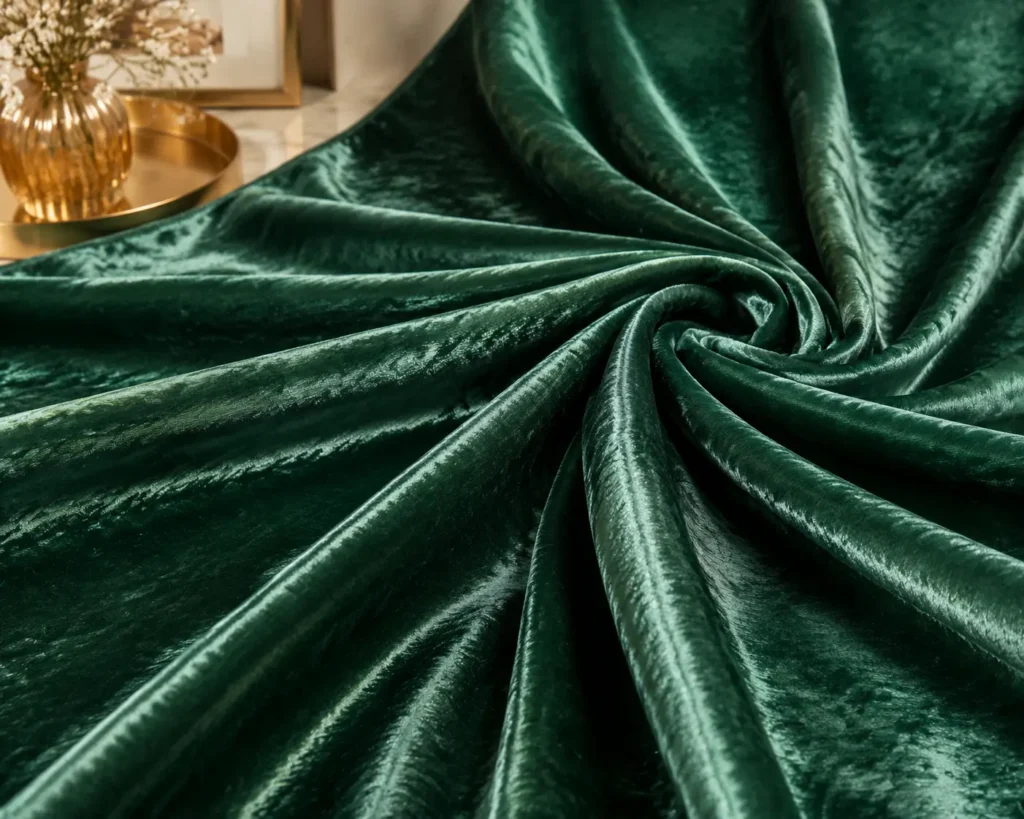
Panne Velvet

Panne is crushed velvet that’s been pressed hard in one direction during finishing, which flattens the pile and gives it a glassy, almost liquid shine. It sits closer to the body than crushed velvet and photographs beautifully under warm indoor lighting, which is common in most UK wedding venues in winter.

Go for panne if you want a straight-cut suit with a sharper, more polished finish rather than a textured one.

Embossed Velvet

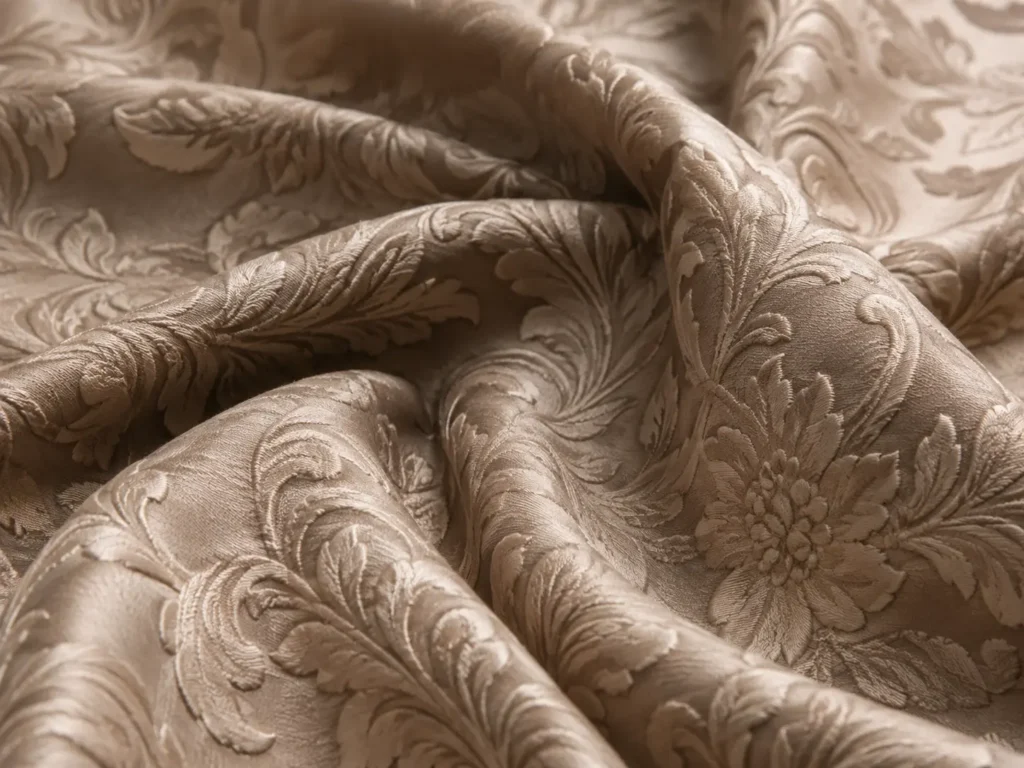
Embossed velvet

Embossed velvet has a raised pattern, usually floral or geometric, heat-stamped into the pile after weaving. You get the texture and the design in one step, without needing separate embroidery. It’s become a genuinely popular choice in premium unstitched sets over the last couple of seasons because it gives a rich, detailed look without the extra weight that heavy embroidery adds.

Stretch Velvet

stretch velvet

Stretch velvet has a small amount of elastane woven in, which gives it a closer, body-hugging fit that plain velvet simply can’t manage. It’s the one to pick if you’re after a fitted co-ord or a slim-cut trouser rather than a flowing silhouette.

It won’t hold heavy embroidery as well as a stiffer velvet, so it tends to suit simpler, cleaner designs.

Embroidered Velvet

embroidered velvet

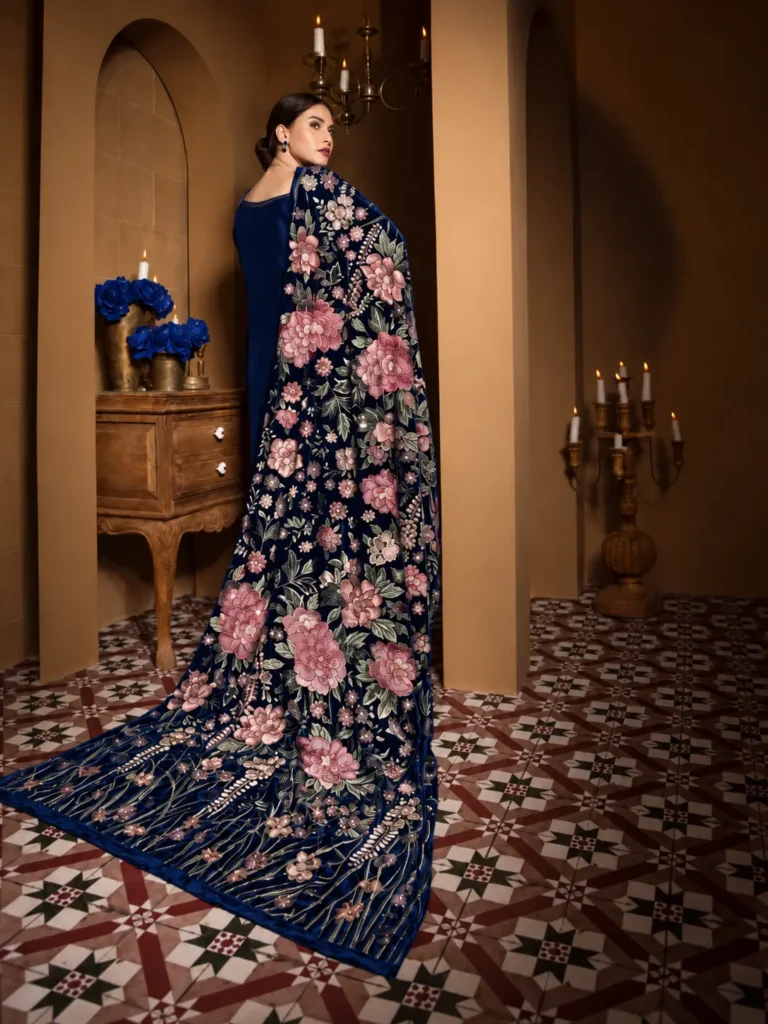
This is where zari, resham, tilla, and dabka work is added directly onto the pile. Velvet holds a needle well without puckering underneath, which is exactly why it’s the go-to base for the heaviest bridal and festive detailing. If your event calls for something that needs to genuinely stand out, this is usually the category you end up in.

Printed Velvet

printed velvet

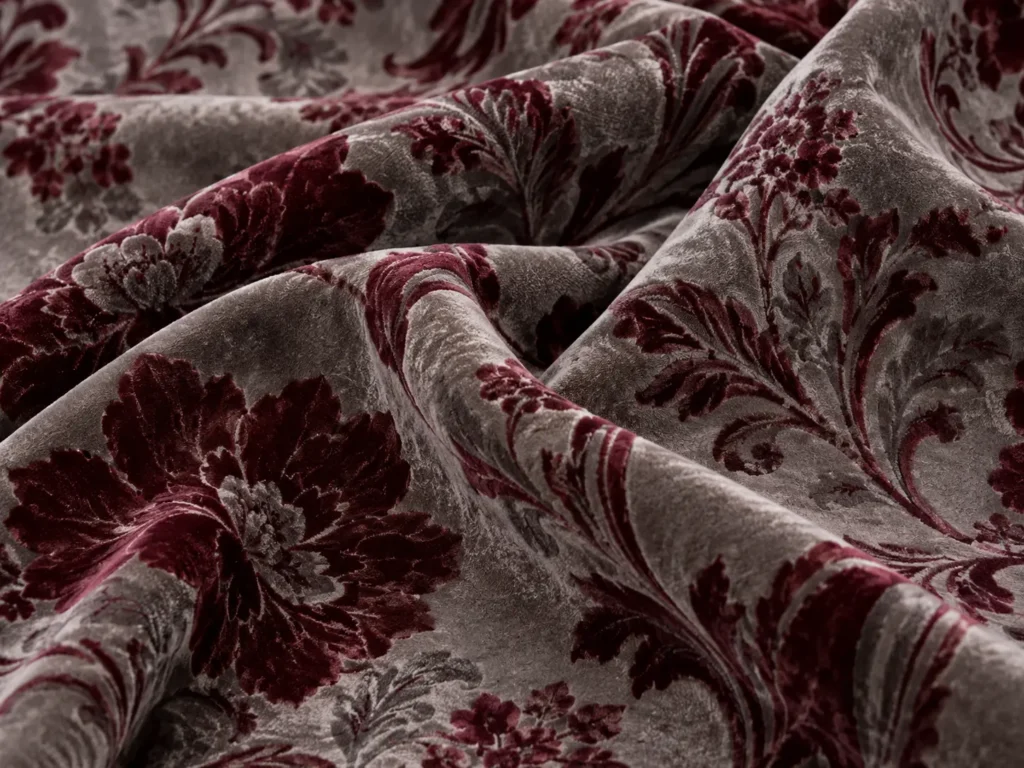
Printed velvet is a luxurious velvet fabric that features decorative patterns, floral designs, abstract motifs, or artistic prints applied onto its soft pile surface. It combines the rich texture and elegant sheen of velvet with the visual appeal of detailed designs, making it popular for both fashion and home décor.

Printed velvet is commonly used for statement dresses, shawls, cushions, curtains, and upholstery pieces. Its smooth feel, vibrant patterns, and premium appearance make it a versatile choice for creating sophisticated and eye-catching designs. Proper care is important to maintain the softness, colors, and raised texture of the fabric over time.

Silk Velvet

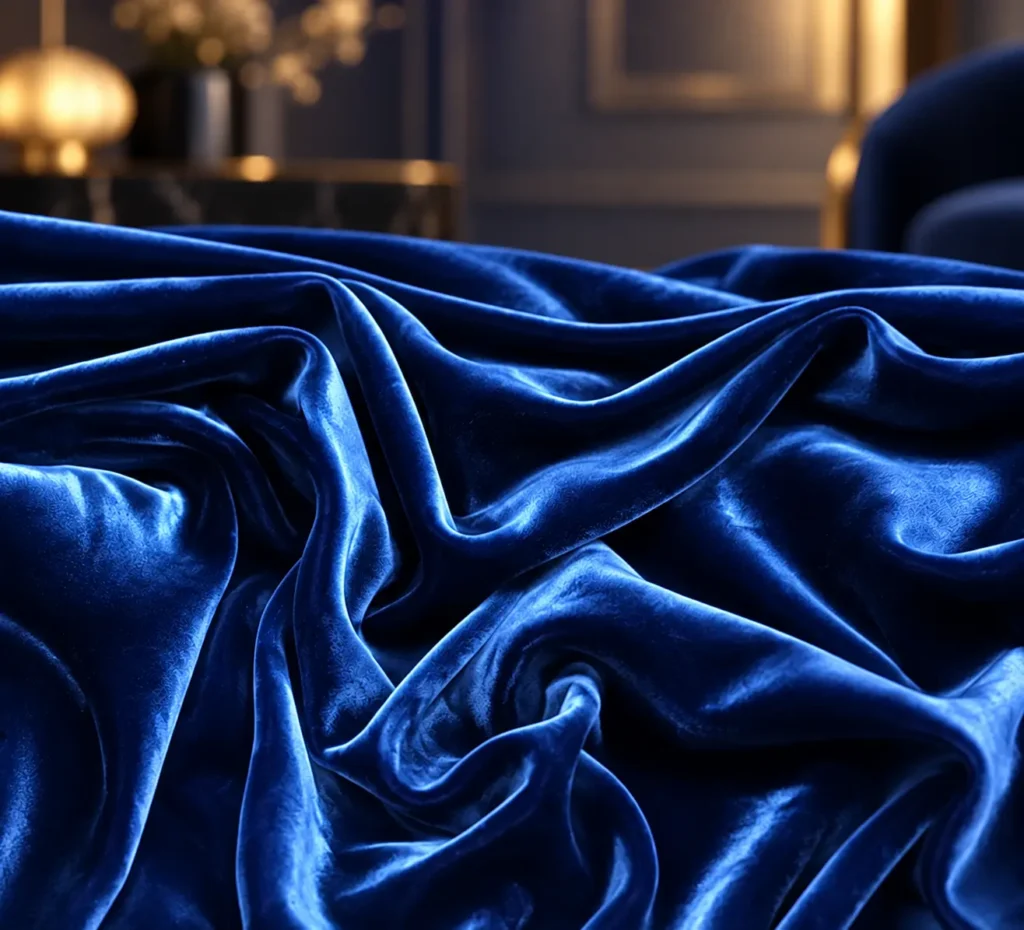
Royal blue silk velvet fabric with smooth flowing folds, silky sheen, luxurious drape, and soft highlights in an elegant modern interior setting.

Silk velvet is one of the most luxurious types of velvet, known for its exceptionally soft feel, rich sheen, and elegant drape. Made from natural silk fibers, it has a smooth surface that reflects light beautifully, giving it a premium appearance.

Silk velvet is commonly used for high-end fashion, bridal wear, evening gowns, and luxury home décor. Although it offers unmatched softness and beauty, it requires careful handling and maintenance due to its delicate nature.

Cotton Velvet

cotton velvet

Cotton velvet is a durable and breathable type of velvet that offers a softer, more natural feel compared to synthetic varieties. It has a rich texture with a slightly matte finish, making it suitable for both clothing and interior applications.

Cotton velvet is commonly used for jackets, dresses, cushions, curtains, and upholstery because of its comfort and strength. It provides a luxurious velvet look while being easier to maintain for everyday use.

A note on “9000” and “11000” velvet: 

If you’ve come across these terms while browsing, they’re wholesale fabric trade names used by mills, mainly for polyester micro-velvet grades, and not a standard measure of quality that UK shoppers need to worry about. What actually matters when you’re buying a Pakistani designer suit is the fabric type above, the pile weight, and whether the piece is genuinely original rather than a copy, which we’ll come back to further down.

Velvet Suit Silhouettes and Styles

Once you know the fabric, the next question is which style to have it made into. A quick note before we get into it: these are design styles you can request from your own tailor once your unstitched fabric arrives, not finished garments we stitch ourselves. Think of this section as inspiration for your tailor’s table, not a product list.

Velvet Frocks and Long Gowns

A floor-length or ankle-length flared silhouette paired with straight trousers underneath. This design works especially well for evening receptions where you want something dramatic without going into full bridal territory.

Straight-Cut Trouser Suits

A clean, tailored kurta paired with a matching trouser, often finished with light sequin or bead detailing along the neckline and sleeves. It’s the most versatile option if you want something you’ll actually wear more than once.

Gharara and Sharara Styles

Flared bottoms paired with a shorter, embellished kurti on top. These are traditionally the styles you see at mehndi nights and winter wedding functions, and velvet gives them real weight and movement compared to lighter fabrics.

Velvet Shawl Suits

A straight shirt and matching trousers paired with a heavily embroidered or digitally printed velvet shawl thrown over the top. This is the style built for actual winter warmth as much as looks, since the shawl doubles as an extra layer once the evening gets colder.

Thinking ahead to your own winter wedding wardrobe? 

Browse our full winter collection for velvet, khaddar and karandi pieces from brands like Charizma, Riaz Arts and Zarif, all held in UK stock and ready to dispatch.

How to Style Velvet Suits by Occasion

The fabric type and the silhouette should both change depending on what the event actually is. Here’s how to match them up.

Wedding and Bridal Occasion Styling

For a wedding guest or bridal function, embroidered velvet in a gharara or sharara cut is the strongest choice. Pair it with Kundan jewellery for a traditional finish, and lean towards richer colours like maroon, emerald or deep navy that photograph well under evening lighting.

Festive and Party Wear Styling

Crushed or embossed velvet works well here without tipping into full bridal weight. A statement embroidered dupatta or velvet shawl adds the festive touch without needing to go as heavy as a wedding outfit.

Casual and Semi-Formal Styling

Plain or panne velvet with minimal embroidery is the more practical pick for a family dawat or a smaller gathering. It still carries that winter-appropriate warmth and shine without feeling overdressed for the room.

If you want to match your velvet type to your actual wedding venue, whether it’s a fully heated hall or a mix of indoor and outdoor spaces, our types of velvet for UK weddings guide breaks that down venue by venue. And if you’re choosing between velvet and other winter fabrics altogether, our guide on velvet versus chiffon versus karandi for UK wedding venues is worth a look too. 

2026 Velvet Colour Trends

Jewel tones are holding strong for 2026, with deep maroon and emerald green leading the way for bridal and wedding guest pieces. Navy and black remain the safest picks for formal evening events, while blush pink, burgundy, and plum are showing up more often in festive and engagement wear. Velvet isn’t going anywhere either. If anything, the heavier, richer textures are getting more popular as UK weddings lean into a more traditional winter look

How to Pair Dupattas with Velvet Suits

Velvet is a heavy fabric on its own, so the dupatta you pair it with matters more than people expect.

Organza Dupatta with Velvet

A lightweight organza dupatta, usually with embroidered borders, gives a nice contrast against the weight of a velvet shirt. It keeps the overall outfit from feeling too heavy, especially for indoor venues that run warm.

Silk Dupatta with Velvet

Silk brings a more traditional, structured drape and works particularly well with straight-cut suits or simpler velvet pieces where you want the dupatta itself to carry some of the shine.

Embroidered Velvet Palachi Shawl

For full winter coverage, a matching or contrasting velvet palachi shawl, heavily embroidered or digitally printed, completes the look while genuinely keeping you warmer than a lighter dupatta would.

Want to see the fabric before you commit to a style?

Our velvet fabric collection includes crushed, embossed, and embroidered pieces from Charizma, Riaz Arts, and Maria B, with the fabric weight listed on each product page.

Frequently Asked Questions

Which velvet is best for suits?

 Embroidered velvet is generally the best choice for formal Pakistani suits, since it holds detailed threadwork well without puckering. For everyday or semi-formal wear, a lighter panne or polyester-based velvet is more practical and easier to care for.

Silk-based velvet is considered the highest quality, thanks to its deep sheen and heavier drape. Most modern “silk velvet” is a silk-rayon blend rather than pure silk, which keeps the price more reasonable while still giving that rich finish.

Pure silk velvet is the most expensive type, followed by heavily embroidered velvet where the cost comes from the zari, resham or tilla work added on top. Polyester-based velvet sits at the more affordable end of the range.

Polyester-based velvet is the most affordable option. It keeps the soft pile and sheen associated with velvet while being far easier to look after than a silk-based piece.

Velvet suits are best worn from October through to February, for winter weddings, festive functions and formal evening events. The dense pile traps warmth, making it one of the few fabrics that works for both looks and comfort in UK winter weather.

Leave a Reply

Your email address will not be published. Required fields are marked *