How to Care for Heavy Winter Fabrics: Velvet, Karandi & Khaddar

How to Care for Heavy Winter Fabrics Velvet, Karandi & Khaddar

How do you safely clean Pakistani winter suits at home?

Velvet: Never machine wash or iron directly. Dry clean embroidered or zari suits; hand-soak plain velvet in cold water pile-down.

Karandi: Hand-wash in cool water with pH-neutral liquid detergent. Never wring. Dry flat on a towel away from UK radiators.

Khaddar: Always pre-wash unstitched fabric to pre-shrink (2-4%). Gentle cold machine wash inside-out; air-dry away from direct heat and sunlight.

Why Pakistani Winter Suits Need Special Care in the UK

A high-end Pakistani suit isn’t just plain fabric, it’s a mix of heavy winter weaves, delicate dyes, and detailed handwork like Zari (metallic thread), Gota, or Resham embroidery.

When you live in the UK, winter suit care comes with two hidden enemies that most basic care guides ignore:

UK Hard Water (Limescale): Calcium and magnesium in UK tap water build up inside heavy fibers like Khaddar and Karandi, making them feel stiff and scratchy after 2 to 3 washes.

Central Heating & Radiators: Hanging damp heavy fabrics over or near hot radiators bakes the natural fibers, causing severe shrinkage and brittleness.

Most damage doesn’t happen while wearing your suit; it happens during washing and drying. Here is how to keep your Velvet, Karandi, and Khaddar suits looking brand new season after season.

1. How to Care for Velvet Pakistani Suits

Velvet is a luxurious, high-density fabric made of cut tufted threads (the “pile”) that create its iconic shine and depth. Once this pile is crushed or flattened, the fabric permanently loses its lustre.

Micro-Structure: Cut-pile tufted silk, rayon, or micro-polyester blend

Weight / GSM: Heavyweight (280 to 350 GSM)

Shrinkage Risk: Low (Fiber distortion / Pile crush risk: CRITICAL)

Dye Sensitivity: High (Water agitation causes dye bleeding)

Major Threat: Mechanical friction, direct ironing, and metal oxidation on Zari work

⚠ What NEVER to Do with Velvet

Never machine wash: The drum agitation crushes the pile instantly.

Never iron directly on the surface: Heat melts synthetic velvet and flattens natural velvet pile.

Never wring or twist: Twisting breaks the structural pile anchorage.

Never hang wet: Heavy wet velvet stretches out of shape at the shoulders.

Step-by-Step: Washing & Cleaning Velvet

Step 1: Check for Embroidery & Zari Work First

If your velvet suit features heavy Tilla, Dabka, or Zari (metallic threads), do not wet wash it at home. Metallic threads react with tap water and oxygen, turning dull or black. Dry cleaning is mandatory for embroidered suits.

Step 2: Cold Water Soak (For Plain Velvet)

Fill a clean tub with cold water (under 20°C). Add 5ml of a gentle, pH-neutral liquid detergent (like Woolite). Stir water first so detergent fully dissolves.

Step 3: Submerge Pile-Side Down

Turn the suit inside out so the pile faces inward. Submerge gently without rubbing or scrubbing. Let it soak for 10 minutes max.

Step 4: Rinse Without Friction

Drain the soapy water. Refill with fresh cold water. Gently press the suit against the bottom of the basin to flush out soap. Repeat until water runs clear.

Step 5: Towel-Roll Drying Method

Lay the suit flat on a thick white towel. Roll the towel up like a roll cake and press gently to absorb excess water. Never wring!

Step 6: Air-Dry Flat in Shade

Unroll and lay flat on a drying rack away from direct sunlight and radiators.

Pro-Tip: Restoring Flattened Velvet & Spot Cleaning

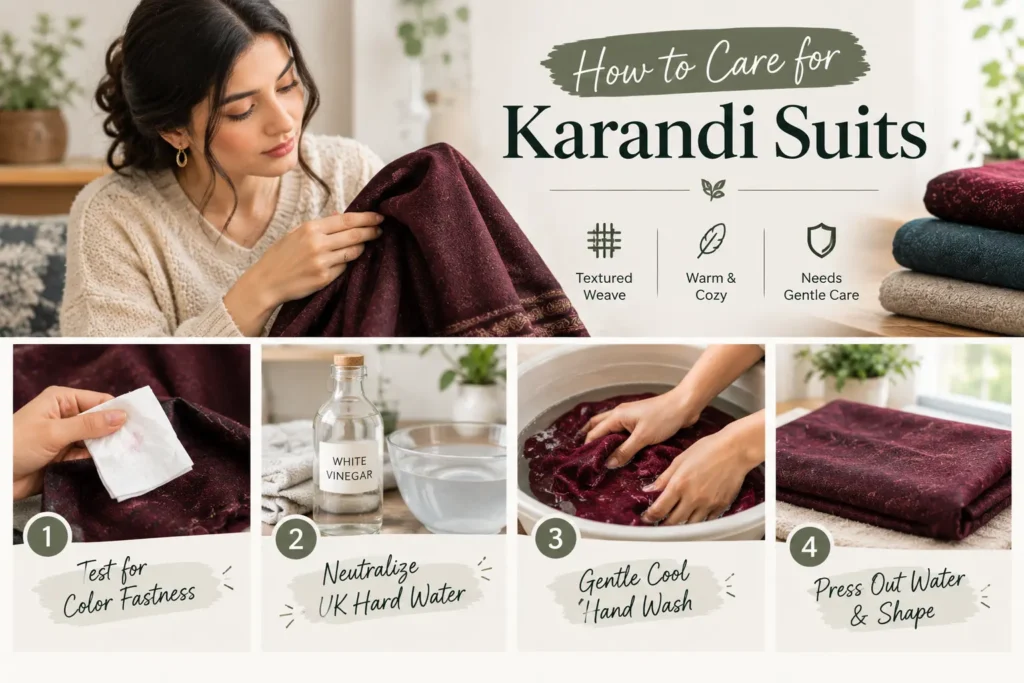
2. How to Care for Karandi Suits

Karandi is a traditional semi-synthetic or wool-cotton textured fabric known for its subtle slub texture and cozy drape. Because it contains wool or silk blends, it shrinks quickly if exposed to heat.

Micro-Structure: Cross-hatched textured weave (Cotton/Wool or Silk-blend slub)

Weight / GSM: Mid-to-Heavyweight (200 to 260 GSM)

Shrinkage Risk: High (3% to 5% on heat exposure)

Dye Sensitivity: Moderate (Deep reds, maroons, and navy bleed during first wash)

Major Threat: Hard water stiffness, pilling from friction, radiator shrinkage

Step-by-Step: Washing & Caring for Karandi

Step 1: Test for Color Fastness

Dampen an inside seam with a few drops of water and press against a clean white tissue. If color transfers, wash the suit alone in cold water.

Step 2: Neutralize UK Hard Water

If you live in a hard water area (like London or the South East), add 1 tablespoon of clear white vinegar to your wash water. Vinegar neutralizes limescale minerals and prevents Karandi from feeling stiff.

Step 3: Gentle Cool Hand Wash

Use room temperature water and mild detergent. Swish the suit gently through the water for 3 to 5 minutes. Avoid scrubbing embroidered patches or necklines.

Step 4: Press Out Water & Shape

Press the garment against the sink wall to push water out. Lay flat to dry on a towel.

Woman inspecting burgundy Karandi fabric with a four-step visual guide to testing colour fastness, handling hard water, gentle hand washing, and drying Karandi suits safely.

Looking for Premium Velvet Suits That Stand the Test of Time?

Explore our handpicked collection of authentic micro-velvet suits, pre-treated for maximum durability and color hold.

3. How to Care for Khaddar Suits

Khaddar is a durable, hand-loomed or power-loomed 100% cotton winter fabric. While it handles washing better than velvet, it is highly prone to initial shrinkage and color loss.

Micro-Structure: Plain heavy cotton weave / spun yarn

Weight / GSM: Heavyweight (220 to 280 GSM)

Shrinkage Risk: Very High (up to 4% on first wash)

Dye Sensitivity: High (Reactive dyes on cotton lose vibrancy in hot water)

Major Threat: Tumble drying, direct sunlight fading, unwashed tailoring mistakes

⚠ CRITICAL: Pre-Washing Unstitched Khaddar

If you bought an unstitched Khaddar suit, always wash the unstitched fabric in cold water before taking it to your tailor. Khaddar shrinks by up to 2 inches after its first wash. If you stitch it first, your sleeves and trouser length will end up too short!

Step-by-Step: Washing Khaddar

Turn Inside-Out: Protect printed and dyed surfaces from drum friction.

Cold Wash Only: Machine wash on a gentle cold setting (30°C max). Hot water breaks cotton dye bonds and shrinks fibers.

Use Mild Detergent: Avoid bleach, optical brighteners, or heavy washing powders.

Air-Dry on Padded Hangers: Hang in shade. Never tumble dry Khaddar, heat bakes

Upgrade Your Winter Wardrobe with Pure Khaddar & Karandi!

Direct imports from top Pakistani brands with guaranteed color fastness and rich cotton-wool textures.

Fabric Care Quick-Reference Table


Care Parameter

Velvet Suits

Karandi Suits

Khaddar Suits

Machine Wash

❌ Never

⚠️ Delicate/Wool cycle only

✅ Gentle cold wash (30°C max)

Hand Wash

✅ Cold water only

✅ Cool water + vinegar

✅ Cold/ambient water

Pre-Wash Needed?

❌ No

⚠️ Optional

✅ Mandatory for unstitched fabric

Dry Cleaning

✅ Recommended for Zari

✅ Recommended for embroidered suits

❌ Not necessary

Ironing Method

💨 Steam only (no direct contact)

🌡️ Low heat with a pressing cloth

🌡️ Medium heat (inside out)

Hard Water Defense

Hand-soak in soft water

1 tbsp vinegar in rinse water

1 tbsp vinegar in rinse water

Drying Method

Flat on a towel in shade

Flat in shade

Hang on a padded hanger in shade

How to Iron Pakistani Winter Suits Safely

  1. Velvet: Do not touch with an iron. Use a garment steamer held 5 to 10 cm away. If steaming from behind, lay face-down on a plush towel and lightly steam the reverse side.
  2. Karandi: Set iron to low/silk heat. Always use a damp cotton pressing cloth between the iron and suit to avoid shiny burn marks.
  3. Khaddar: Iron while the fabric is still slightly damp. Set to medium/cotton heat and iron inside-out to keep printed colors crisp.

Seasonal UK Storage Guide: Keeping Suits Fresh Over Summer

  • Clean Before Storing: Never store worn suits. Residual sweat and skin oils attract clothes moths and cause yellow stains over time.
  • Use Breathable Garment Bags: Store Velvet and Karandi in cotton garment bags, never plastic bags, which trap moisture and cause mildew in humid UK wardrobes.
  • Moth Protection: Place natural Cedar Wood Blocks or dried lavender sachets in your wardrobe (especially for Karandi wool blends). Avoid chemical mothballs that leave heavy odors on delicate embroidery.
  • Avoid Outer Wall Wardrobes: In UK homes, wardrobes placed against cold exterior walls collect dampness during winter. Keep stored suits in interior wardrobes with good airflow.
 

Frequently Asked Questions

Can I machine wash an embroidered velvet suit?

No. Machine washing destroys the pile texture of velvet and tarnishes metallic Zari embroidery. Always dry clean embroidered velvet suits.

Wash inside-out in cold water, use a liquid detergent without optical brighteners, and add 1 tablespoon of white vinegar to the first rinse to lock in dyes. Always dry in shade.

Stiffness is caused by UK hard water mineral deposits sticking to cotton/wool fibers. Soak the suit for 10 minutes in cold water mixed with 1 tablespoon of white vinegar, rinse, and air dry flat.

Never tumble dry Velvet, Karandi, or Khaddar. Tumble dryers use high heat and drum friction that shrink cotton and permanently crush velvet pile.

Ready to Wrap Yourself in Warmth & Luxury?

Browse our authentic, ready-to-ship Pakistani winter suits in the UK. Enjoy fast nationwide dispatch, zero import hassles, and guaranteed original quality.

Leave a Reply

Your email address will not be published. Required fields are marked *