What Is Lawn Fabric? Easy Guide to Summer Comfort for UK Buyers

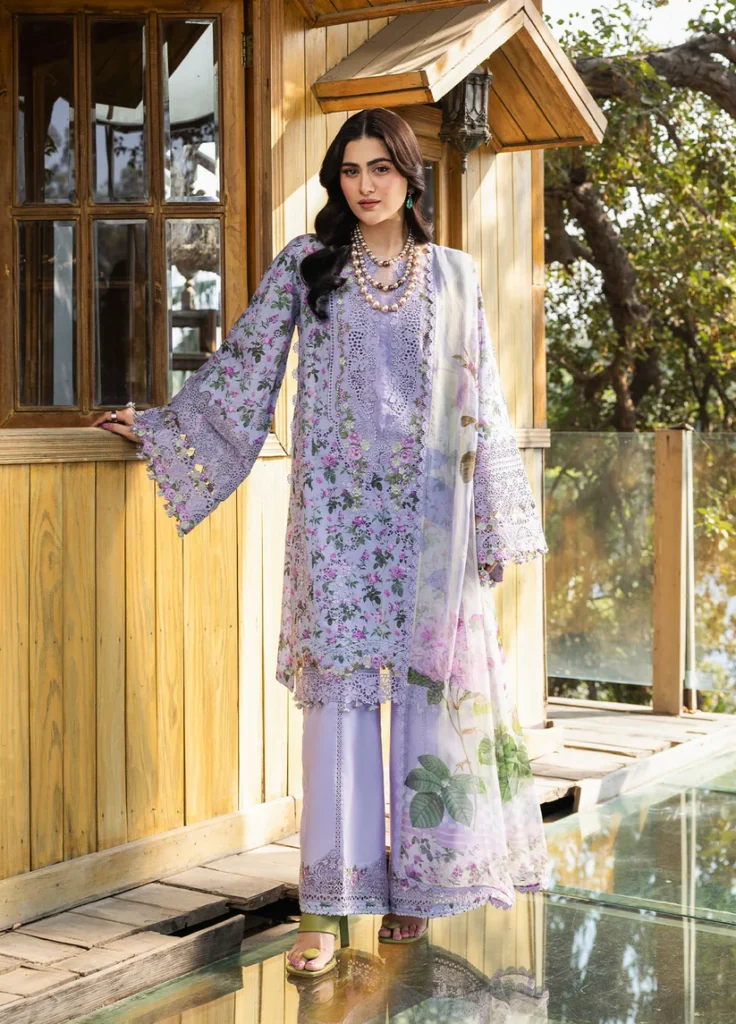
Elegant featured image for a blog titled "What Is Lawn Fabric? Easy Guide to Summer Comfort for UK Buyers", featuring a woman wearing a navy blue embroidered Pakistani cotton lawn suit in a beautiful outdoor garden with floral dΓ©cor, soft drapes, and warm natural light, showcasing breathable summer lawn fabric fashion.

Shopping for summer outfits online, and every product page says “lawn” without explaining what it actually is? You are not the only one.

The word gets used so loosely that buyers often cannot tell if they are paying for fine cotton or a thin imitation. Here you will know exactly what lawn fabric is, how it is made, how it compares to voile and cambric, and what to check before you buy lawn suits online in the UK.

What Is Lawn Fabric?

Lawn fabric is a lightweight, plain-weave cotton textile woven from fine, combed yarns. It has a high thread count, a smooth, silky handle, and a slightly sheer finish. This is why it is one of the coolest and most breathable fabrics for warm-weather clothing.

The name comes from Laon, a linen-weaving town in northern France. Today, lawn cloth is made almost entirely from cotton rather than linen.

In short:

Lawn is a type of cotton fabric, not a separate fibre. Every lawn is cotton (or occasionally linen or silk), but not every cotton fabric is lawn.

Where Does the Name β€œLawn” Come From?

The term “lawn” comes from Laon, a city in northern France. This city was once a major producer of fine linen cloth. For centuries, “lawn” meant linen lawn, which was sometimes called handkerchief linen because it was fine enough for handkerchiefs and christening gowns.

Cotton lawn rose to prominence during British rule in India and Pakistan. The fabric’s breathability made it far more practical than linen or wool in a hot climate. Cotton, grown locally in huge quantities, gradually replaced linen as the base fibre, and the name “lawn” stuck.

That history explains why lawn is still tied so closely to South Asia today. In Faisalabad, Pakistan’s textile hub, lawn has grown into the single biggest revenue generator for local mills each summer. Brands launch new lawn collections every spring in a cycle the local press calls “lawn season.” That same seasonal excitement is why British Pakistani shoppers in the UK search for lawn collections every year.

How Is Lawn Fabric Made?

Lawn is a plain-weave fabric. This means the horizontal (weft) and vertical (warp) threads cross over and under each other in the simplest possible pattern, one thread at a time. This is the same basic structure used for poplin and cambric, but lawn uses much finer yarn.

Combed vs Carded Cotton

Lawn is spun from combed or carded cotton yarns.

Combed cotton has had the short, weak fibres removed before spinning, leaving long, straight fibres. This produces a smoother, slightly lustrous cloth. Lawn made this way is sometimes called nainsook.

Carded cotton retains more of the short fibres, resulting in a slightly softer but less refined finish.

Thread Count and Finish

Lawn uses a high number of fine yarns per inch. This is what gives it that silky, almost paper-like hand feel. Manufacturers often apply a light starch or crisp finish, which is why good lawn feels structured rather than limp, without ever becoming stiff like organza.

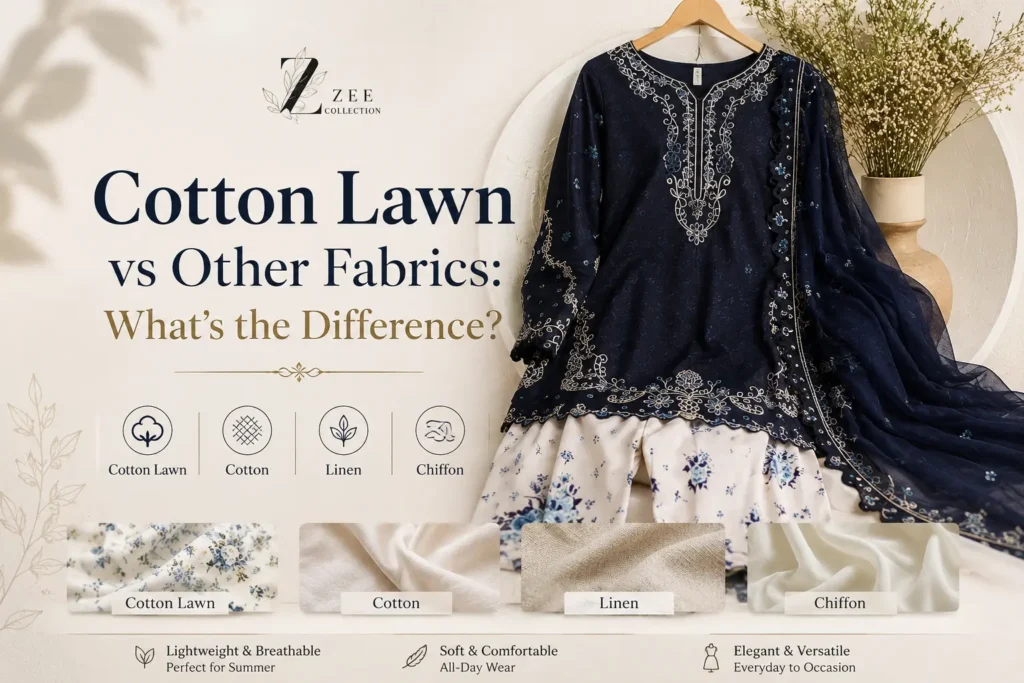
Comparison image showing a navy blue embroidered Pakistani cotton lawn suit with the title "Cotton Lawn vs Other Fabrics: What's the Difference?", highlighting how lawn fabric compares with linen, cotton, voile, chiffon, and cambric for comfort, breathability, and summer wear.

Key Characteristics of Lawn Fabric

Property

What It Means for You

Lightweight

Comfortable for long days out in warm weather

Semi-sheer

Light colours may need a lining or slip underneath

Breathable

Air moves through the weave, keeping you cool

Silky, Smooth Handle

Sits nicely against the skin, no scratchy texture

Crisp Yet Fluid

Holds embroidery and prints well while still draping

Natural Fibre

Usually 100% cotton, so it is kind to sensitive skin

Takes Colour Well

Ideal for the bold prints seen in Pakistani lawn suits

Ready to experience the Original Lawn?

Don’t settle for cheap, rough imitations. Browse our Unstitched Pakistani Suits Collection to find authentic, high-quality cotton lawn suits imported straight from top Pakistani designer brands. Enjoy fast UK delivery on gorgeous prints

Cotton Lawn vs Other Fabrics: What’s the Difference?

Voile: Softer and more sheer than lawn, with far less body. Lawn has more structure and is easier to sew or embroider.

Organza: Much crisper and stiffer than lawn, often made from silk or synthetic yarn. Lawn sits between voile and organza on the crispness scale.

Cambric: Closely related to lawn but woven more tightly, giving a slightly stiffer, more opaque cloth.

Poplin: Heavier than lawn, with a fine ribbed texture from thicker weft yarns, better suited to shirts that need more structure.

Chiffon: Sheerer, softer, and more fluid than lawn, usually made from silk or polyester rather than cotton.

Plain Cotton: All lawn is cotton, but not all cotton is lawn. Standard cotton fabric uses thicker yarns and a lower thread count, so it feels heavier and less refined.

Know your colour already?

See what is in stock right now. Browse our Pakistani Lawn Dressses

Is Lawn 100% Cotton, or Does It Contain Polyester?

Traditional lawn is 100% cotton, and premium or luxury lawn suits are almost always pure cotton. Some budget-priced lawn in the mass market blends a small percentage of polyester or viscose to cut costs and reduce wrinkling.

It is always worth checking the fabric composition on the product page before you buy. If a listing simply says “lawn” with no fibre content, ask the seller or look for a composition label such as “100% cotton lawn.”

Types of Lawn Fabric You’ll Come Across

Plain or Dyed Lawn: A single block colour with no print, often used for linings or plain kurtas.

Printed Lawn: Digitally or screen-printed patterns are the most common style in Pakistani lawn suits.

Embroidered or Luxury Lawn: Printed lawn finished with hand or machine embroidery, laser-cut work, or organza borders. You will see these in collections from brands like Maria B, Elaf, and Iznik.

Linen Lawn (Handkerchief Linen): The original form of lawn, still used for heirloom sewing and fine handkerchiefs.

Silk Lawn: A rarer, more luxurious version woven from fine silk yarn instead of cotton.

What Is Lawn Fabric Used For?

Lawn’s combination of lightness and structure makes it useful well beyond fashion.

Clothing: Summer dresses, blouses, shirts, children’s wear, and unstitched Pakistani suits are the biggest use cases. This is especially true for British Pakistani shoppers dressing for Eid, weddings, and summer events.

Linings: Because it adds almost no bulk, lawn is a popular natural lining for heavier fabrics.

Heirloom Sewing and Babywear: Its softness and fine weave make it a long-standing favourite for christening gowns, smocking, and delicate children’s clothing.

Formal and Religious Dress: Lawn is also used for items like the Anglican surplice, a loose white vestment worn by clergy, which relies on lawn’s crisp yet lightweight drape.

Handkerchiefs and Home Textiles: The original use of the fabric is still relevant in fine linen ranges today.

For UK shoppers, the most common reason to search “what is lawn fabric” is simpler than any of this. They have seen a Pakistani lawn suit online and want to know what they are actually buying before they spend money on it.

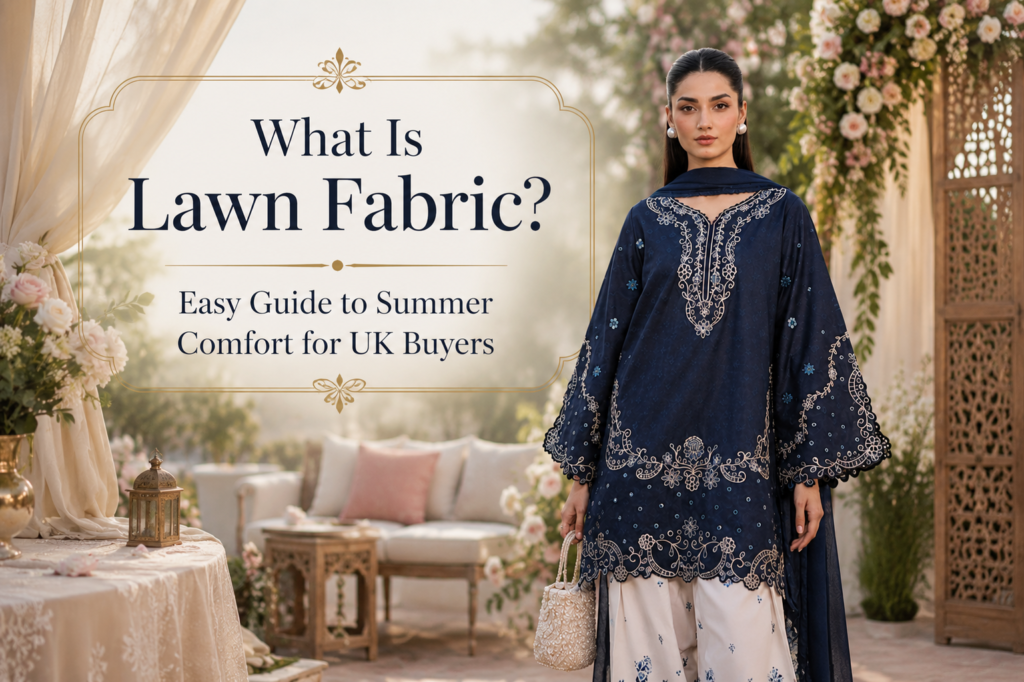
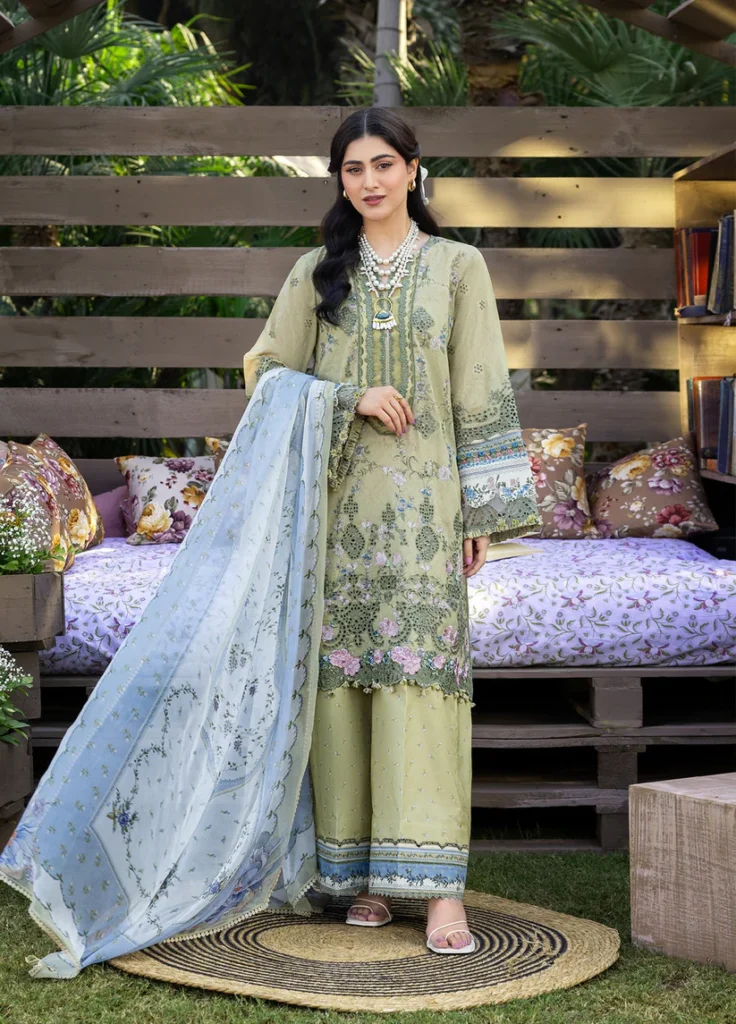
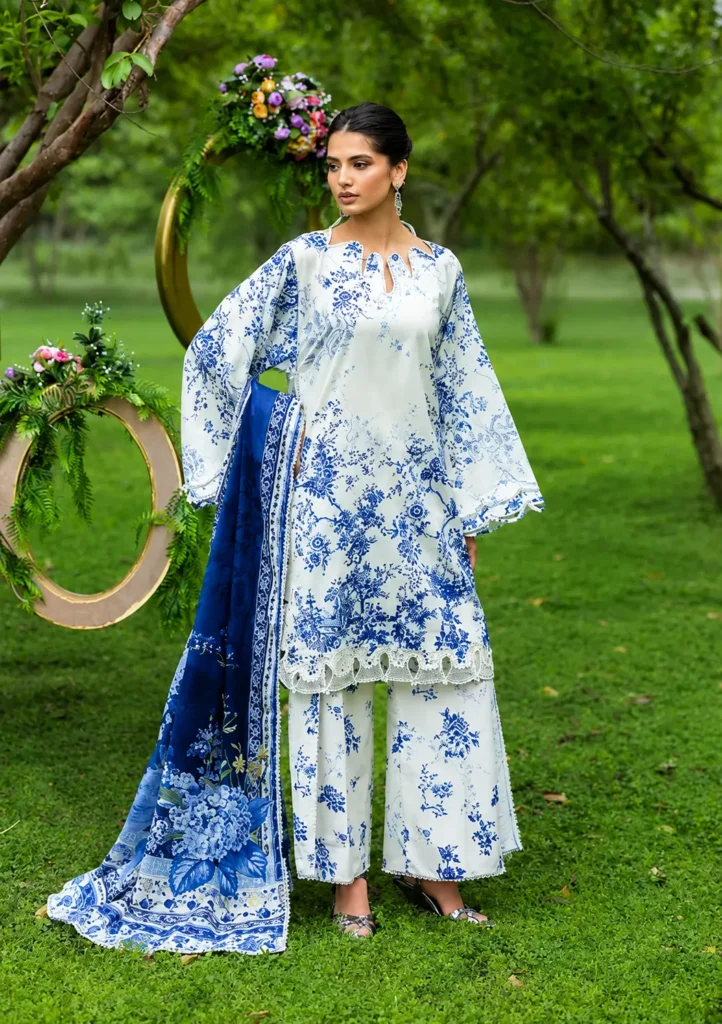
Woman wearing a white and blue printed Pakistani cotton lawn suit with a matching floral dupatta, standing in a lush green garden. The lightweight lawn fabric showcases breathable comfort, elegant prints, and stylish summer fashion.

Is Lawn Fabric Good? Pros and Cons

ProsCons
Genuinely breathable, making it ideal for British summers and warmer climatesWrinkles easily due to its lightweight natural cotton construction
Soft against the skin, making it suitable for sensitive skin and hot weatherLighter shades can be semi-sheer and may require a slip or lining
Takes prints, embroidery, and dye exceptionally wellCheaper printed lawn fabrics may feel thinner than higher-density weaves
Made from natural cotton fibres and generally easy to care for at homeRequires gentler washing than synthetic fabrics to maintain its finish

Lorem ipsum dolor sit amet, consectetur adipiscing elit. Ut elit tellus, luctus nec ullamcorper mattis, pulvinar dapibus leo.

Does Lawn Fabric Wrinkle? Care Tips

Yes, lawn wrinkles more easily than synthetic fabrics because it is a lightweight, mostly natural cotton weave. That is normal and not a sign of poor quality. To keep it looking its best:

  • Hand wash or use a gentle machine cycle in cool water.
  • Avoid bleach or harsh stain removers, which can dull prints and embroidery.
  • Iron on a moderate heat while the fabric is still slightly damp.
  • Dry clean embroidered or heavily embellished lawn suits to protect delicate threadwork.
  • Store folded rather than on tight hangers to avoid stretching sheer sections.

How to Buy Genuine Lawn Fabric Online in the UK

Lawn is one of the most searched fabrics in UK Pakistani fashion, but not every listing tells you what you are actually getting. Before you buy, check for:

Fibre Content: Look for “100% cotton lawn” rather than a vague “lawn fabric” description.

Stitched or Unstitched: Unstitched lawn suits are sold as fabric pieces (shirt, dupatta, trousers) so you can have them tailored to your own measurements. This is the traditional way lawn suits are bought and worn.

Brand and Collection: Established Pakistani designers tend to use denser, higher-quality lawn than unbranded prints.

Season: Most lawn collections launch in spring, so new arrivals from February onwards are usually the freshest stock.

Delivery and Returns: Confirm UK delivery times and the return policy before ordering unstitched fabric online.

If you would like to see the difference in quality for yourself, our unstitched Pakistani suits collection carries lawn, chiffon, silk, and velvet from established Pakistani designers, all sold as unstitched pieces so you can have them made to fit. For this year’s new arrivals, the Iznik Summer Spring Lawn ’26 and the Elaf Premium Luxury Lawn Collection are two of our most popular ranges for embroidered and printed cotton lawn.

If you are shopping ahead of Eid or a summer wedding, our Maria B M Prints Eid lawn suits offer festive prints at a more accessible price point, and our Zara Shahjahan Lawn collection is a good example of the heritage floral style that lawn is best known for. For a wider look at seasonal buying, our Eid lawn collection guide walks through the main brands releasing lawn each year, and you can browse every fabric type we stock on our luxury fabrics page.

Frequently Asked Questions

What is the difference between cotton and lawn fabric?

Lawn is a type of cotton fabric, not a separate material. Ordinary cotton fabric can be woven from thicker yarns at a lower thread count. Lawn specifically uses fine, combed cotton yarns woven at a high thread count, giving it a lighter, silkier, and more semi-sheer finish than standard cotton cloth.

Yes. Lawn is prized for being lightweight, breathable, and soft against the skin, which makes it one of the best natural fabrics for hot weather. Its main downside is that it wrinkles more easily than synthetic fabrics and can be semi-sheer in lighter colours.

A saree is fine if it is formal and modest. A Western outfit can work for a walima or modern reception as long as it is modest and dressy, ideally with a dupatta or shawl.

Traditional and premium lawn is 100% cotton. Some cheaper commercial prints may blend in a small amount of polyester or viscose, so it is worth checking the fabric composition listed on the product before you buy.

No. Lawn and voile are both lightweight, sheer cotton weaves, but lawn has more body and structure, making it easier to sew and embroider. Voile is softer, drapier, and more sheer, with less crispness than lawn.

Lawn is a summer fabric. Its lightweight, breathable weave is designed to keep you cool in warm weather, which is why lawn collections traditionally launch in spring rather than autumn or winter.

“Lawn” is the English name for this fabric, taken from Laon, the French city known for producing fine linen lawn. In everyday English, “lawn” or “cotton lawn” both refer to the same lightweight, high thread count cotton weave.

Leave a Reply

Your email address will not be published. Required fields are marked *