5 Ways to Layer Pakistani Unstitched Suits in Cold UK Weather

5 Ways to Layer Pakistani Unstitched Suits in Cold UK Weather

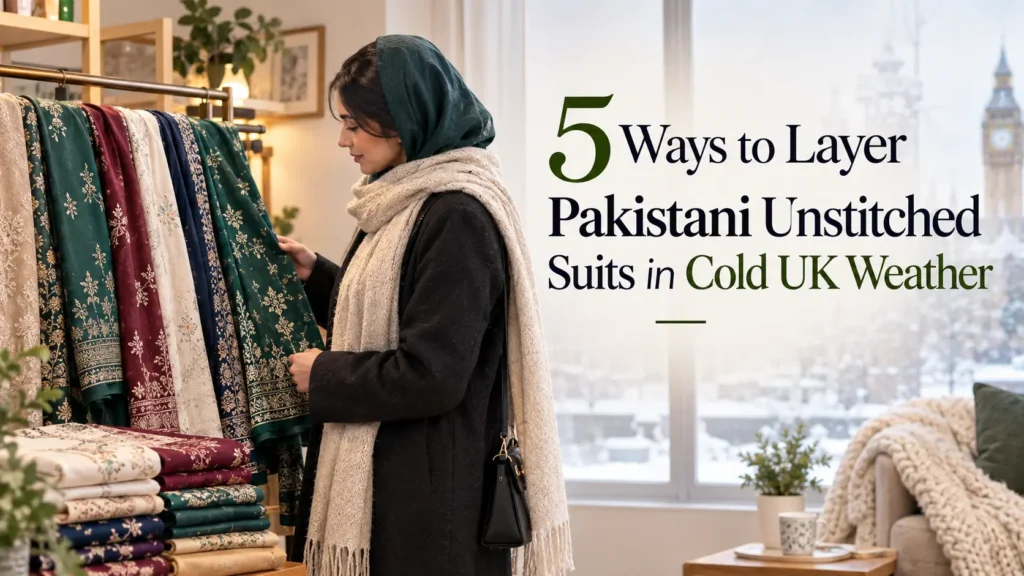
Beating the unpredictable British winter in a Pakistani outfit requires more than just throwing on a coat at the front door. Because indoor central heating and outdoor damp cold demand completely different thermal levels, mastering the three-layer formula (a thermal base, an insulating mid-layer like a pashmina or velvet vest, and structured outerwear) is essential. 

Unstitched suits offer a distinct advantage here: by altering the fabric cuts at the tailor stage, you create built-in ease through the sleeves and shoulders for hidden thermal leggings and tops. Whether you are styling heavy-spun Khaddar, dense Karandi, drapable Marina, or luxury Velvet, adjusting your layers to the specific fabric density ensures you stay comfortably warm outdoors in 5°C to 12°C weather without overheating inside. 

Why Unstitched Suits Are Actually Easier to Layer

Unstitched suits give you one real advantage most people never use. Because the fabric has not been cut and sewn yet, you can ask for a slightly roomier fit in the sleeves and through the body when it goes to the tailor. Building the outfit around layering from the start works much better than trying to squeeze a thermal top under a kameez that was stitched close to the body. That one decision, made before the needle even touches the fabric, makes every layer below easier to wear and better fitting.

Sick of Ruining Your Outfit With Bulky Jackets?

You spent time getting your suit stitched perfectly; don’t hide it under an ill-fitting coat. Discover heavy-spun winter fabrics designed to keep you warm on their own, dispatched straight from our UK stock.

Way 1: Start With a Fitted Thermal Base Layer (Top & Bottom)

Your base layer is what actually keeps you warm, while everything else on top just holds that heat in. A snug, long-sleeve thermal top in a lightweight nude or black shade traps body heat without showing through your kameez.

Do not ignore your lower body either. Pair fleece-lined thermal leggings or slim warmers underneath your straight trousers or shalwar. Cold UK wind cuts straight through standard trouser fabrics, and an invisible bottom layer solves this problem completely. When taking your unstitched suit to the tailor, mention this extra layer so they leave enough room in the sleeves, shoulders, and thigh areas for comfortable movement.

Way 2: Swap the Dupatta for a Woven Wool or Pashmina Shawl

A thin chiffon or silk dupatta will not hold up once UK temperatures drop below 10°C. Swap it for a heavy woven wool, pashmina, or embroidered Banarasi shawl instead.

Drape it over both shoulders for full coverage on a proper cold day, or pin it neatly over one arm when you want something a bit more dressed up for an event. Pair a heavier pashmina shawl with lighter mid-weight suits like viscose or marina, and use a lighter embroidered wool stole with fabrics that are already thick like khaddar or karandi so you do not overload one outfit with too much weight.

For a few more ways to wear it, our shawl draping guide walks through several styles beyond these two.

Way 3: Add a Waistcoat, Quilted Vest, or Velvet Outer Piece

A fitted waistcoat or a sleek quilted vest over your kameez keeps your core warm without hiding the embroidery on your sleeves, which is the main part of an unstitched suit most people do not want covered up.

This works especially well over khaddar, karandi, and marina suits, as these fabrics have enough natural body to hold an extra layer without looking shapeless. For formal evening events, swap the casual vest for a tailored velvet waistcoat or jacket to add extra richness and heavy insulation against freezing nights.

Not sure if your piece is karandi?

Our karandi fabric guide explains exactly what to look for.

Way 4: Choose Your Outerwear by Print, Not Just Warmth

Your coat or cardigan should work with your suit print instead of fighting against it. A busy, heavily embroidered khaddar or karandi suit looks much more put together under a plain, neutral wool coat in shades like camel, black, or navy, since the solid coat gives the eyes a resting place.

On the other hand, a simple or solid suit can easily carry a bolder coat or a check pattern without looking overdone. Fitted blazers work well for office days when you need a smart, structured look, while long wool coats suit full formal outfits better.

Way 5: Match Your Layers to Your Specific Winter Fabric

Not every winter fabric needs the exact same amount of help staying warm. Matching your strategy to the specific fabric keeps you from either freezing outdoors or sweating inside:

Mid-Weight Fabrics (Marina, Viscose, Cambric): These are soft and drape closely to the body. They need a full thermal top, thermal leggings, and a wool coat for peak winter, but work on their own in autumn.

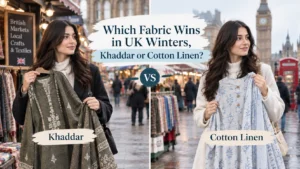
Heavy Winter Fabrics (Khaddar, Karandi): These coarse weaves naturally trap air and hold warmth well on their own. A light thermal top underneath and a waistcoat or light stole on top is usually more than enough.

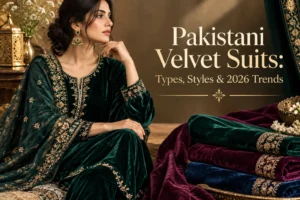
Luxury Winter Fabrics (Velvet): Exceptionally warm and dense. Velvet sits on its own for most cold days, requiring only a light embroidered stole or shawl for formal evening events.

Formal Fabrics (Chiffon, Net, Silk): When worn for winter weddings, these fabrics need the maximum support. Always wear a thermal vest underneath and cover up with a heavy pashmina or velvet shawl while traveling between venues.

For the full rundown of every fabric we carry, our guide to different types of Pakistani fabrics covers the rest.

Frozen During Evening Events & Winter Weddings?

Thin formal dupattas won’t protect you from freezing UK night temperatures. Upgrade your festive wardrobe with rich, heavy-grade designer velvet suits that deliver luxury without the chill.

Five Fusion Styling Combinations, Ethnic Meets Western

Most layering guides stop at throwing a coat over your suit and calling it done. That’s fine if you just want to stay warm, but it doesn’t do much for how the outfit actually looks. These five combinations are ones we style regularly and put your suit together with western pieces properly, not just on top of it.

1. Solid Coord, Checkered Coat, Thin Belt

If your suit is a solid colour, shirt and trousers in the same shade with no print, this is the easiest fusion look to get right. Layer it under a checkered coat in a matching or complementary tone (camel suit with a camel-and-cream check, for example), then cinch a thin leather or fabric belt at the waist over the kameez. The belt breaks up the block of colour and gives the whole outfit a defined shape instead of looking like one long column. This works especially well for milder cold, not the coldest days, since the coat is doing light work rather than heavy insulation.

2. Thermal Base, Loose Contrast Shirt, Open Collar

For proper cold, start with your thermal underneath as usual, then add a loose, collared shirt in a contrast colour over or under the kameez, worn open at the collar with the top two buttons undone. If you’re wearing it over the kameez, leave it unbuttoned like a shacket. If you’re wearing it underneath, let the collar and cuffs peek out at the neckline and wrists. Either way, it reads as a deliberate western-ethnic mix rather than an accident, and the contrast colour stops the whole outfit from looking too matched and formal.

3. Turtleneck Under an A-Line Kameez

Swap the usual thermal vest for a fitted turtleneck in a neutral shade under an A-line or straight-cut kameez. Push the turtleneck sleeves up slightly so they show at the kameez cuffs, pair with straight trousers rather than a shalwar, and finish with ankle boots. This one works particularly well with khaddar, since the structure of the fabric holds the shape while the turtleneck does the actual warming.

4. Oversized Denim Jacket Over a Printed Suit

For a genuinely casual day, an oversized denim jacket over a printed lawn or khaddar suit gives you a relaxed, western-leaning look without losing the print underneath. Keep the jacket unbuttoned so the embroidery stays visible down the front, and stick to a plain denim wash rather than a distressed or embellished one so it doesn’t compete with the suit’s own detailing.

5. Untucked Kameez, Wide-Leg Trouser, Belted Waistcoat

Instead of a fitted waistcoat, try a slightly longer one worn open over an untucked kameez, then belt it at the waist over both layers. Pair it with wide-leg trousers instead of a fitted shalwar. This gives you the warmth of Way 3 with a more structured, almost tailored silhouette that works well for daytime festive events or family gatherings where you want to look put together without anything too fitted.


Shoe Styling for UK Pavements in Winter

What you wear on your feet matters just as much as your top layers, especially on wet UK pavements. Ankle boots are the most practical everyday pairing because they keep your feet warm on cold commutes and handle rain easily.

Knee-high boots work invisibly under longer trousers for extra leg warmth on the coldest days. For office wear, a low block heel boot keeps things smart without being uncomfortable, while neutral-toned leather boots work best for festive events without pulling focus away from your suit embroidery.

Fed Up With Import Customs & 3-Week Overseas Delivery?

Skip the shipping stress and surprise border taxes. Order 100% original Pakistani designer suits held in our UK warehouse with fast Royal Mail delivery to your doorstep.

Frequently Asked Questions

What is the 3-layer rule for winter?

It means dressing in three clear layers: a skin-tight base layer for trapping body heat, a mid-layer like a shawl or vest for insulation, and a structured outer layer like a coat for blocking wind and rain.

A drizzle is fine for short trips, but khaddar is cotton at its core, so it absorbs water and gets heavy in a proper downpour, which means a coat is worth carrying even on a cloudy day.

Yes, a tailored blazer over a straight-cut kameez creates a sharp, professional look that works particularly well in UK office settings.

Since khaddar and karandi are already thick and warm, pair them with a light wool or silk-embroidered stole. Save heavy pashmina shawls for lighter fabrics like viscose or marina.

Leather ankle boots and low block-heel boots are best for UK winter weather, keeping your feet dry, warm, and comfortable on cold pavements.

Yes, pairing it with pieces like a denim jacket, a turtleneck, a belt or wide-leg trousers instead of a shalwar gives it a fusion look without changing the suit itself.

 How to Layer for UK Winter

A Pakistani unstitched suit does not need to sit in your wardrobe all winter. Get the base layer right, add one warm mid-layer at a time, and finish with outerwear that works with your fabric and print instead of fighting against it. That is what smart winter layering comes down to.


Leave a Reply

Your email address will not be published. Required fields are marked *