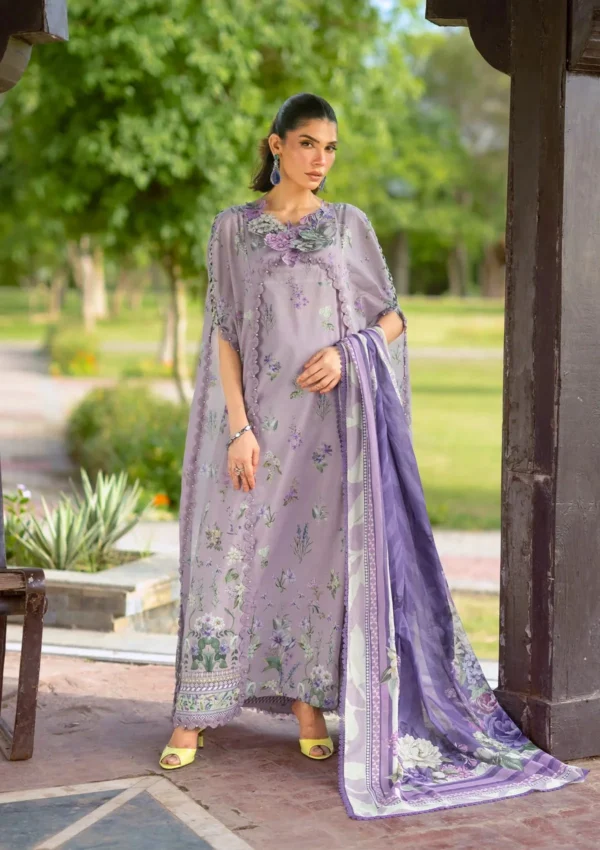
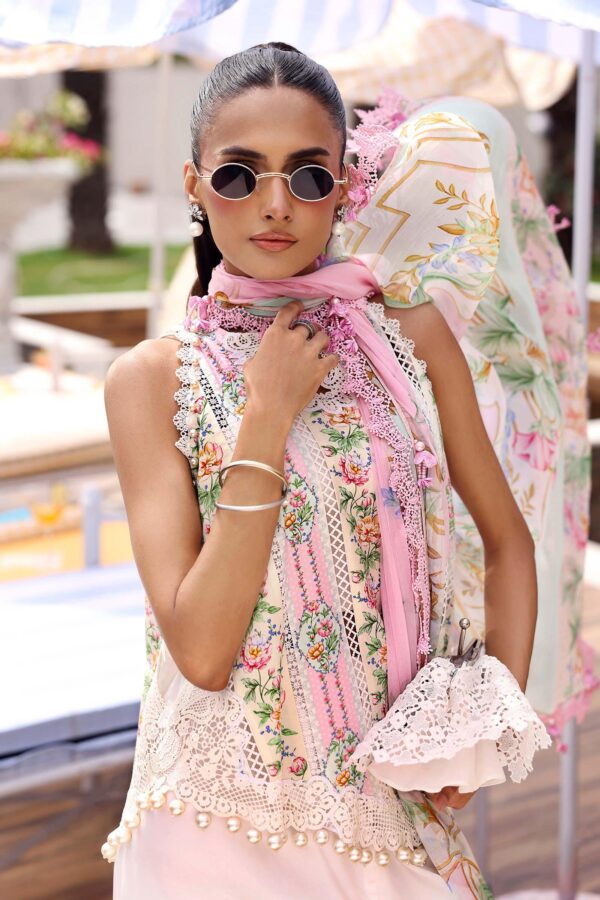
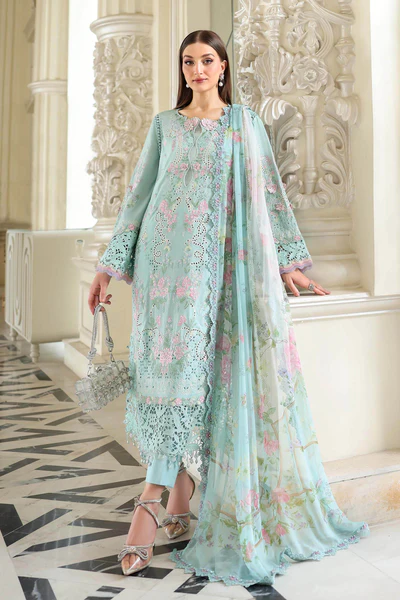
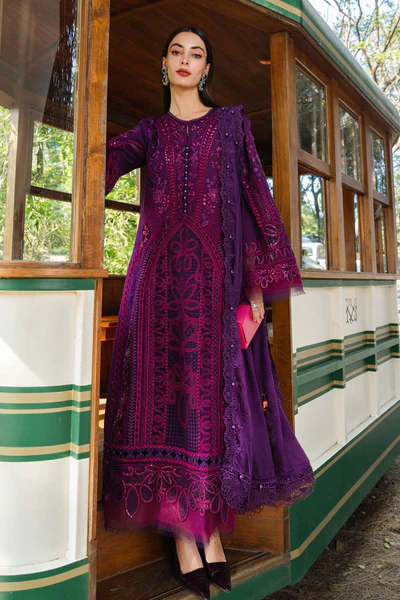
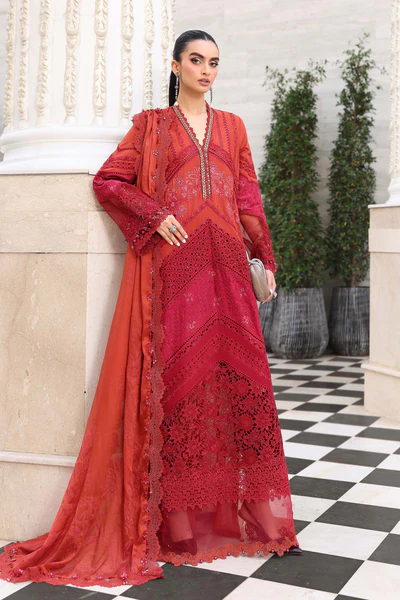
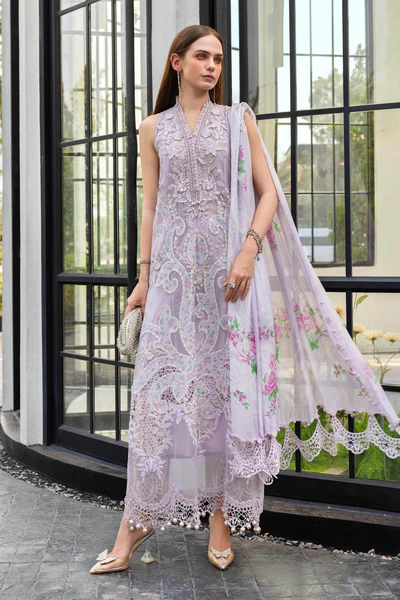
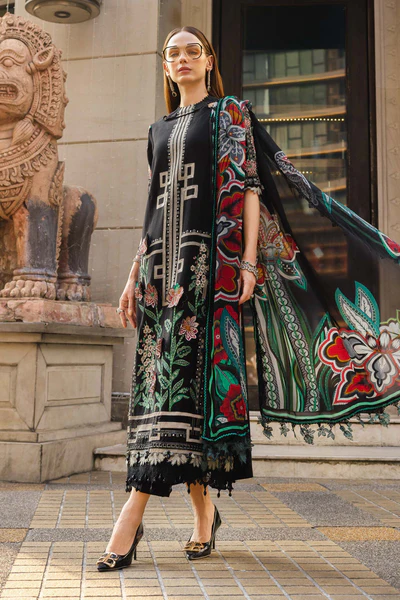
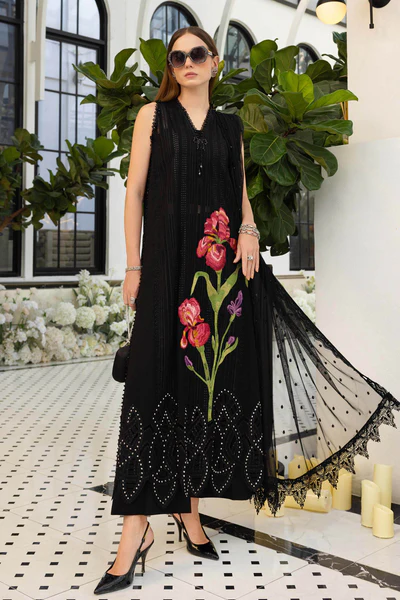
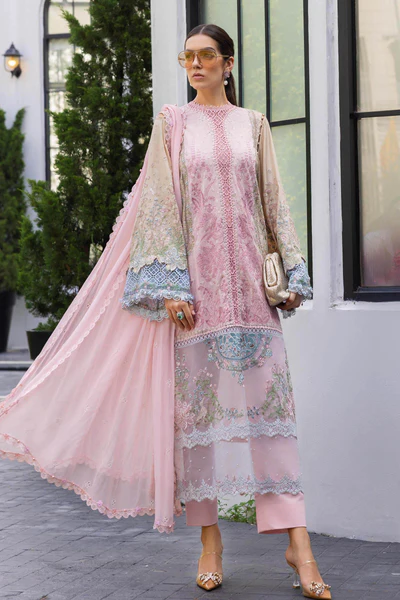
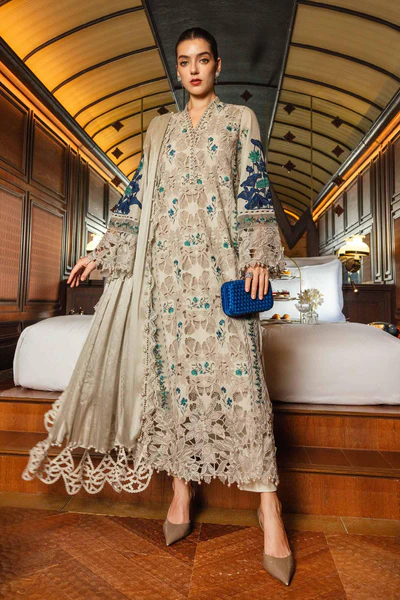
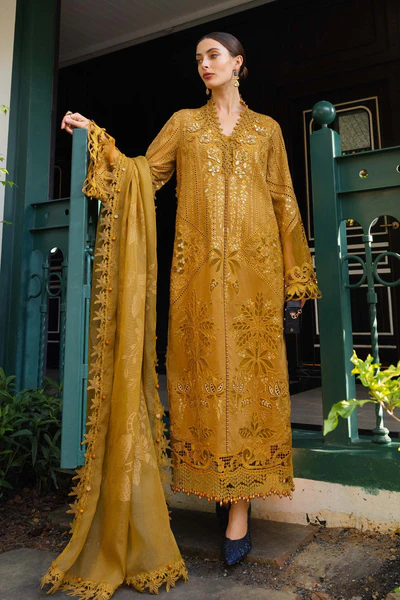
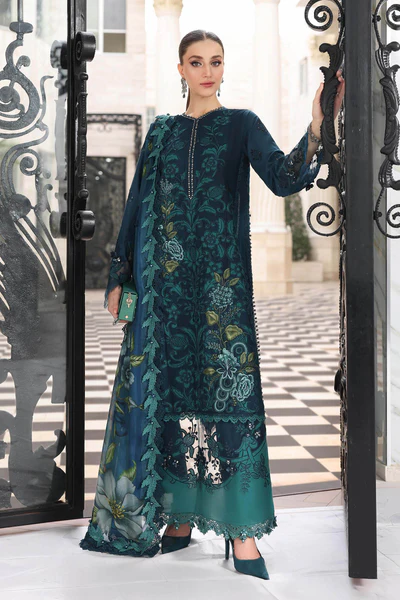
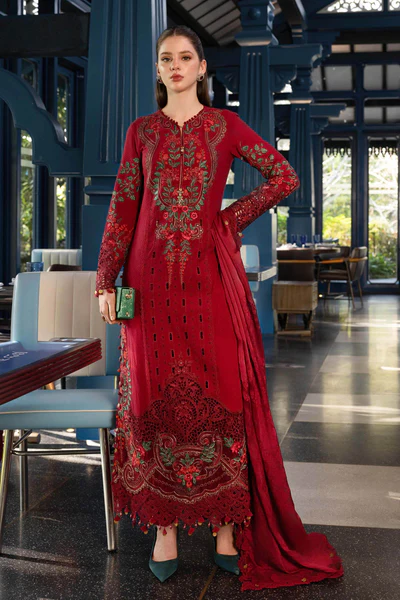
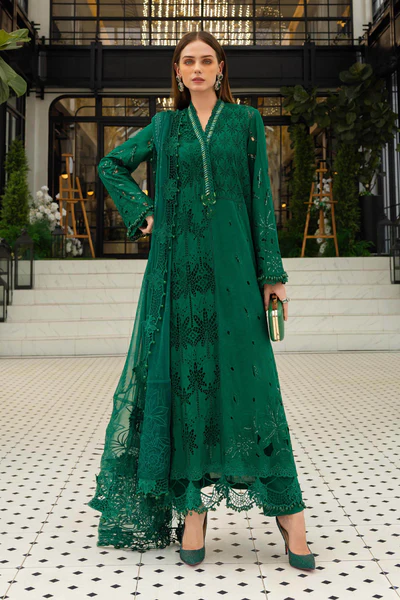
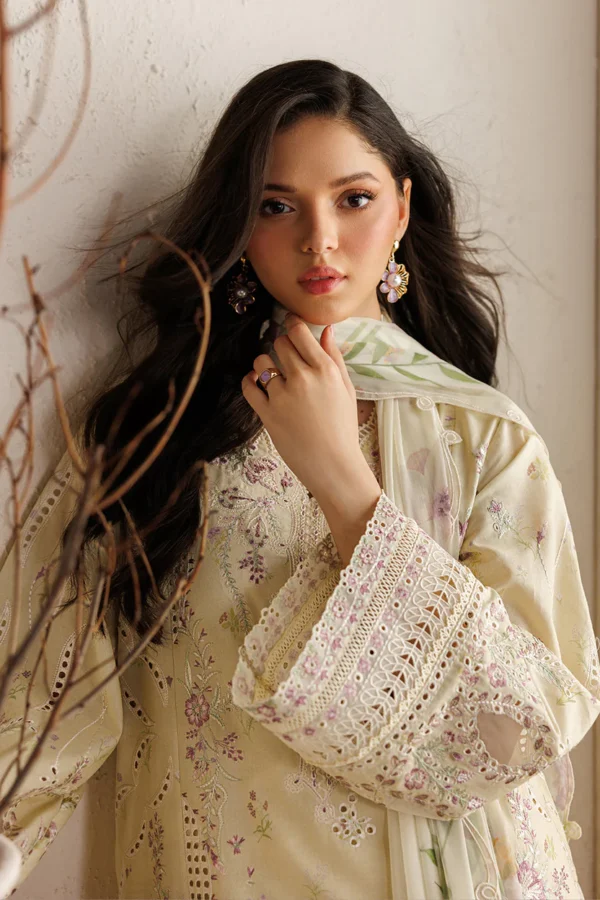
A standard suit comes as three pieces: the kameez (a long tunic top cut to mid-thigh or longer), the shalwar or trousers (the bottoms, available in several different cuts), and a dupatta (a matching scarf that can be draped, pinned or worn loose). Most designer collections are sold unstitched, meaning the fabric arrives as cut panels that a tailor then stitches to your exact measurements.
The fabric itself was originally produced in Laon, France using fine linen, but Pakistani textile manufacturers refined and developed the cotton version into something entirely their own. Today, Pakistani lawn uses 100 percent combed cotton with a thread count between 60 and 100, giving it a smooth drape that holds both embroidery and digital prints exceptionally well.
The Real Reason Lawn Suits Work So Well in the UK
Here is the part that surprises people. Lawn suits were designed for hot, humid Pakistani summers where temperatures regularly reach 40 degrees Celsius. The UK is nothing like that. So why do they remain so popular here?
The answer is central heating.
UK homes, wedding halls, community centres and family venues are heated for most of the year. A Pakistani wedding reception in Birmingham in April, with 300 guests and the heating running, becomes genuinely warm within an hour. Heavy formal fabrics and velvet that feel appropriate for the outdoor temperature become uncomfortable inside. Lawn fabric breathes in those heated indoor conditions the same way it handles outdoor warmth. It does not cling, it does not trap heat against the body, and it keeps you comfortable across a four-hour or five-hour occasion in a way that most formal alternatives simply do not.
For outdoor events and garden parties during British summer, the mild temperatures and occasional breeze suit lawn perfectly. And for everyday indoor wear, whether working from home, visiting family or attending a gathering, the fabric is comfortable year-round in heated British homes. This is why women who try it once keep coming back, even when they have other options available.
Cultural Identity Drives Lawn Suit Popularity in the UK
The UK has one of the largest Pakistani diaspora communities outside South Asia, concentrated in Birmingham, Bradford, Manchester, Leicester and London. Lawn suits have always been part of the cultural fabric of these communities, but the relationship has shifted across generations in a way that has actually strengthened demand rather than weakened it.
For the generation that moved to the UK from Pakistan, wearing lawn was a natural continuation of home. For their British-born children and grandchildren, the choice is more deliberate. Wearing a Maria B collection or an Asim Jofa embroidered suit is an active expression of identity in a country where that identity is not the default. It is cultural pride worn as clothing.
This generational shift has brought Pakistani designer brands into a new cultural space in the UK. Names like Sobia Nazir, Baroque, Rang Rasiya, Elaf, and Iznik carry real significance for younger British Pakistani women in the same way that Western designer labels carry significance for other demographics. New collection launches get discussed, anticipated and shared on social media. The cultural connection and the fashion connection now reinforce each other, which is why the market keeps growing rather than stabilising.
Eid Outfit Shopping in the UK — Why Lawn Wins Every Time
Eid is the biggest single shopping event in the UK Pakistani community, and lawn suits are consistently the most purchased outfit for the celebrations. The reasons are partly cultural and partly very practical.
Eid day involves morning prayers, often in a mosque or large community hall, followed by family visits, meals and celebrations running through the afternoon and into the evening. An outfit needs to look genuinely festive for photographs, stay comfortable through eight to ten hours of wearing, and hold up through the physical reality of a day that involves a lot of sitting, eating, hugging relatives and managing children.
Embroidered lawn, particularly chikankari styles from brands like Elaf Premium, delivers all of this. The embroidery reads as special and festive. The fabric stays comfortable all day. And unlike bridal-weight formal pieces, a well-chosen embroidered lawn suit can be worn again at the next family occasion without looking like a repeat.
There is also a structural reason why Eid and lawn suits became so aligned in the UK. Pakistani designer brands launch their summer lawn collections in late February and March every year. Eid in recent years has consistently fallen in March, April and May in the UK. The fashion calendar and the religious calendar overlap almost exactly, which means new collections arrive just as Eid shopping begins. This creates seasonal momentum that reinforces itself every year.