Cold mornings, a wardrobe full of thin lawn suits from last summer, and nothing warm enough to wear. If that sounds familiar, you’ve probably already come across the word “Karandi” while scrolling through Pakistani designer collections online.
But what actually is it? Is it cotton or silk? Warm enough for a British winter? And more importantly, once you know what to buy, how do you actually get your hands on the real thing without waiting six weeks for a parcel from Lahore or paying a surprise customs bill at your door?
What Is Karandi Fabric?
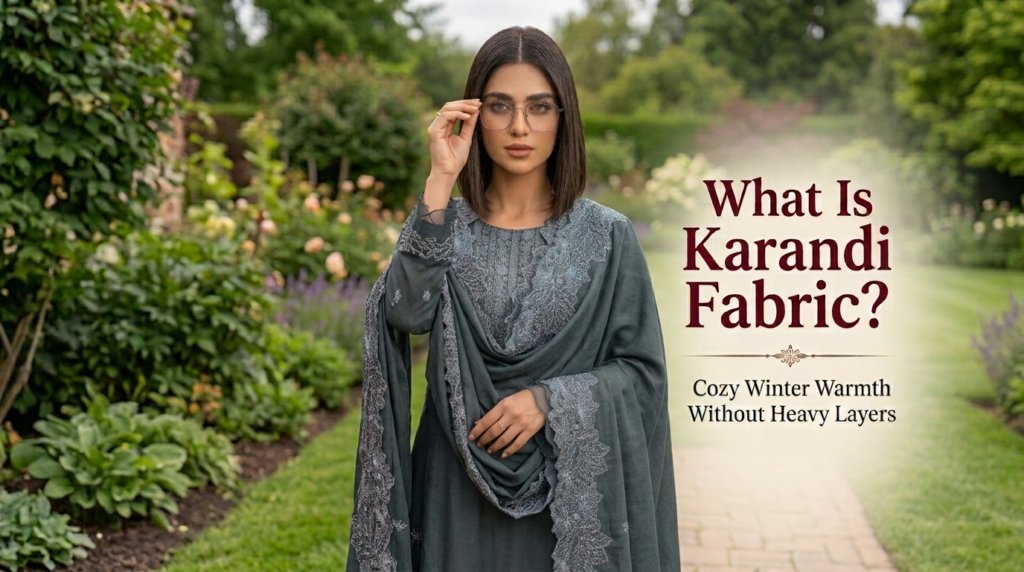
Karandi fabric is a medium to heavy weight winter textile from South Asia, made mainly from cotton and often blended with silk, viscose, or a touch of wool. It has a slightly rough, textured surface (called a “slub” in the textile trade), and it’s the go-to fabric for Pakistani winter suits, shalwar kameez, and shawls.
Think of it as the fabric equivalent of a good jumper. It’s not as light as your summer lawn suits, and it’s not as heavy as a proper wool coat. It sits right in the middle, warm enough for cold days but still comfortable enough to wear all day.
Is Karandi Fabric Silk or Cotton?
Karandi is cotton, not silk. Cotton is almost always the main fibre in Karandi. Mills then add silk or viscose to give it a bit of shine and a smoother drape, and sometimes a small amount of wool to boost the warmth even further. This is worth clearing up properly, because you’ll see it described both ways online, and it causes real confusion for buyers. Some sellers call it “raw silk” because the slightly rough, slubby texture feels similar to raw silk when you run your fingers over it. But feel isn’t the same as fibre content.
The exact mix depends on the mill and the collection. A budget Karandi suit might be closer to plain cotton with a bit of texture. A premium designer Karandi piece will often have viscose or silk woven in, which is why it can feel softer and drape better on the body.
If a listing says “100% silk Karandi” with no cotton mentioned at all, that’s a red flag worth questioning before you buy.