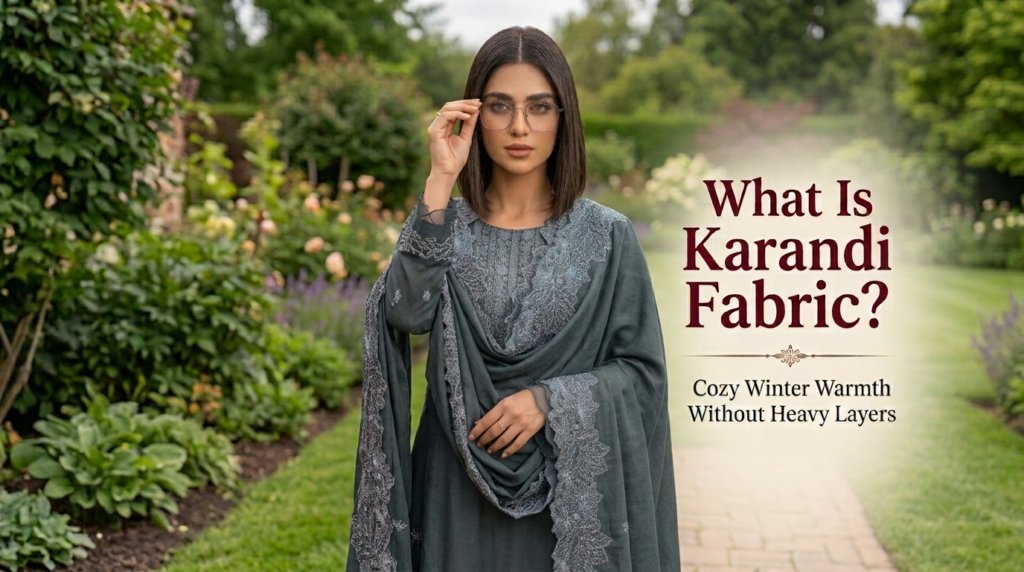
What Is Karandi Fabric? Cozy Winter Warmth Without Heavy Layers

What Is Karandi Fabric Cozy Winter Warmth Without Heavy Layers

Cold mornings, a wardrobe full of thin lawn suits from last summer, and nothing warm enough to wear. If that sounds familiar, you’ve probably already come across the word “Karandi” while scrolling through Pakistani designer collections online.

But what actually is it? Is it cotton or silk? Warm enough for a British winter? And more importantly, once you know what to buy, how do you actually get your hands on the real thing without waiting six weeks for a parcel from Lahore or paying a surprise customs bill at your door?

What Is Karandi Fabric? 

Karandi fabric is a medium to heavy weight winter textile from South Asia, made mainly from cotton and often blended with silk, viscose, or a touch of wool. It has a slightly rough, textured surface (called a “slub” in the textile trade), and it’s the go-to fabric for Pakistani winter suits, shalwar kameez, and shawls.

Think of it as the fabric equivalent of a good jumper. It’s not as light as your summer lawn suits, and it’s not as heavy as a proper wool coat. It sits right in the middle, warm enough for cold days but still comfortable enough to wear all day.

Is Karandi Fabric Silk or Cotton?

Karandi is cotton, not silk. Cotton is almost always the main fibre in Karandi. Mills then add silk or viscose to give it a bit of shine and a smoother drape, and sometimes a small amount of wool to boost the warmth even further. This is worth clearing up properly, because you’ll see it described both ways online, and it causes real confusion for buyers. Some sellers call it “raw silk” because the slightly rough, slubby texture feels similar to raw silk when you run your fingers over it. But feel isn’t the same as fibre content. 

The exact mix depends on the mill and the collection. A budget Karandi suit might be closer to plain cotton with a bit of texture. A premium designer Karandi piece will often have viscose or silk woven in, which is why it can feel softer and drape better on the body.

If a listing says “100% silk Karandi” with no cotton mentioned at all, that’s a red flag worth questioning before you buy.

Looking for authentic Pakistani chiffon suits without the hassle of international shipping?

Explore our latest Pakistani designer chiffon suits in the UK at Zee Collections, featuring 100% original stock delivered fast from our UK hub.

History and Origin of Karandi Fabric

Karandi didn’t start as a fashion trend. It grew out of regional weaving traditions built for cold seasons, long before it became a named category in Pakistani fashion.

The Persian “Qarandi” Origin and Handloom Roots

The name is believed to come from the Persian word “Qarandi,” roughly meaning “to be woven finely.” That fits, because Karandi has always been about careful weaving and textured yarn rather than a single fixed recipe.

Older accounts of “original Karandi” describe pure, heavier threads woven by hand by specialist families, mainly for ceremonial and formal winter wear. Durability and warmth were the whole point.

From Power-Loom Mills to Modern Pakistani Winter Collections

As Pakistan’s textile industry grew, Karandi moved out of small handloom workshops and into large mills. Power looms took over, and mills started using slub yarns with cotton-viscose or cotton-synthetic blends to keep the traditional look while making production faster and cheaper.

That’s how we got the modern “Karandi suit” you see in winter collections today, sitting alongside khaddar and wool blends as one of the main midweight fabric choices.

Most Karandi fabric is produced in Pakistan’s textile hubs, particularly around Gujranwala and other centres across Punjab and Sindh. Some similar fabrics are also woven in North Indian border regions that share the same winter fashion habits.

Physical & Chemical Properties of Karandi Fabric

If you want to know whether Karandi is actually warm, durable, and easy to look after, this is where the real answers are.

  • Weight, Thickness and GSM Range (150 to 220 gsm)

Karandi typically falls between 150 and 220 GSM, which is the standard measure of fabric weight. That puts it firmly in the medium-weight bracket, heavier than lawn but lighter than a thick wool coating. It’s a good balance for anyone who wants warmth without feeling weighed down.

  • Texture, Drape and Warmth

Karandi has a slightly rough, thick-and-thin surface caused by its slub yarn. This texture is exactly what gives it that rustic, luxurious feel, and it’s also why embroidery sits so well on it without the fabric sagging.

Compared to lawn, Karandi drapes more firmly. It holds straighter lines and doesn’t flow as loosely, which is ideal for structured shirts, culottes, and coats.

  • Moisture Regain, Dye Behaviour and Wash Chemistry

Cotton and viscose in Karandi hold a moderate amount of moisture, which is part of why the fabric feels breathable rather than clammy in cold weather. When silk or wool is present, moisture regain goes up slightly, adding to the warmth.

For dyeing, the cotton and viscose parts take reactive dyes well, giving clean, even colour. Any silk or wool content needs gentler treatment, which is why harsh detergents and chlorine bleach should always be avoided on Karandi.

  • Wrinkle Behaviour and Durability

Karandi creases less than lawn thanks to its thickness, though it won’t spring back into shape the way pure wool suiting does. A quick press after washing keeps it looking sharp. The dense weave also means it holds up well to regular wear, which is exactly what you want from a fabric you’ll wear all winter.

Types of Karandi Fabric

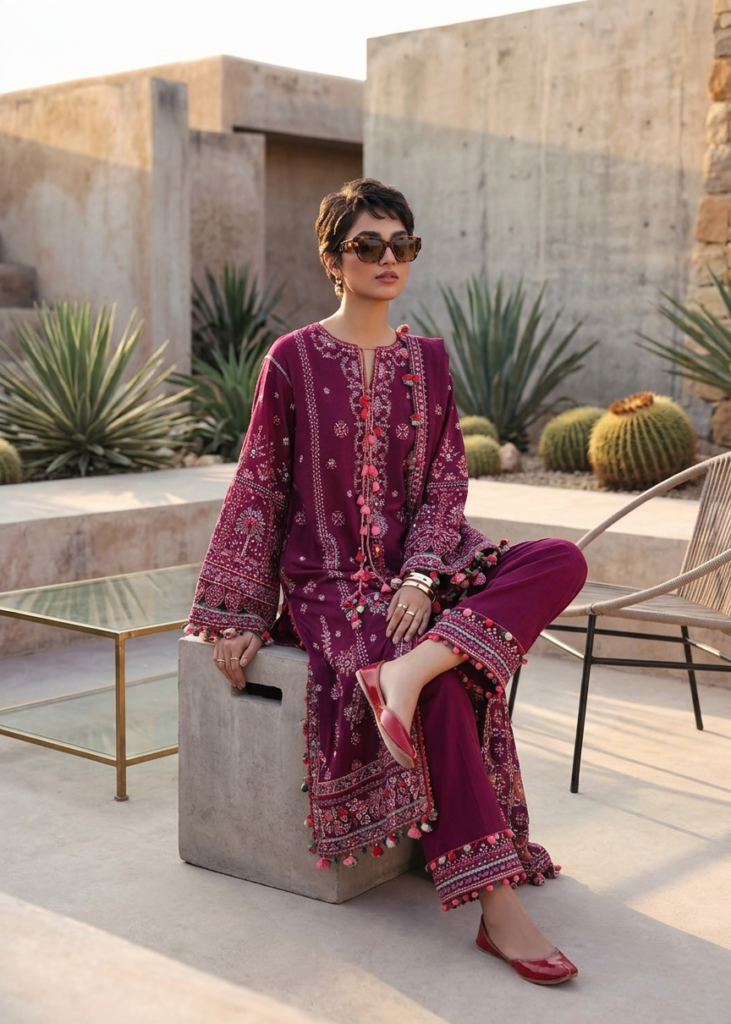
magenta embroidered chiffon suit

There are four main types of Karandi fabric sold in Pakistan’s winter market, and each one suits a slightly different purpose.

Cotton Karandi

This is the most common type. It’s mostly cotton, with a rustic, slightly coarse texture, and it’s what most everyday winter suits are made from. Good warmth, honest price, no fuss.

Silk / Viscose Karandi

Here, cotton is blended with silk or viscose fibres. The result feels smoother in the hand and has a gentle sheen to it. You’ll usually find this in mid-range to premium designer suits where the finish matters as much as the warmth.

Wool-Blend Karandi

Adding wool into the mix pushes the warmth up a notch. This version has more body and is often used for coats, capes, and heavier winter pieces rather than everyday shirts.

Fashion & Embroidered Karandi

This is Karandi that’s been dyed and finished specifically to carry heavy embroidery or lace work. The base cloth is still Karandi, but the focus shifts to the embellishment, colour, and design on top of it. Most of the designer Karandi suits you’ll see from Pakistani brands fall into this category.

Karandi Fabric vs Other Pakistani Winter Fabrics

Karandi isn’t the only winter fabric on the market, so here’s how it stacks up against the others.

Karandi vs Khaddar: Texture, Warmth, Price Compared

Khaddar is coarser, thicker, and hand-woven, giving it heavier insulation than Karandi. Karandi has a finer slub texture and sits at a more moderate weight, which makes it a bit more versatile for everyday wear, while Khaddar wins on pure warmth for the coldest days.

Karandi vs Linen and Cambric

Linen and cambric are both lighter, crisper fabrics better suited to milder autumn days or transitional weather. Karandi has more body and warmth, making it the better choice once temperatures properly drop.

Karandi vs Wool Blends for Extreme Cold

For the harshest cold, a proper wool blend will out-warm Karandi every time. But wool can feel heavy and stiff for daily wear. Karandi gives you a good chunk of that warmth in a fabric that’s still comfortable enough to wear from morning to evening.

Fed up sourcing winter suits that turn out to be the wrong fabric entirely?

Shop original Karandi collections from trusted Pakistani designer brands, stocked and shipped from right here in the UK.

Common Uses and Embroidery Styles on Karandi

Karandi isn’t just a plain winter cloth. It’s the fabric of choice for some of the most detailed embroidery work in Pakistani fashion.

  • Everyday Winter Suits vs Occasion/Formal Karandi Wear

Simpler, less embellished Karandi suits are perfect for daily wear, work, or running errands in the cold. Heavily embroidered Karandi pieces, on the other hand, are built for weddings, Eid gatherings, and winter formal events, where the fabric’s firm base supports much denser embroidery than a lighter cotton ever could.

  • Popular Embroidery Techniques Used on Karandi Suits

You’ll commonly see Zari (metallic thread) work, Resham (silk thread) embroidery, Tilla work, and Panni embellishment on Karandi suits. Some designer collections also use chawal tanka stitching or a ghera patti border along the hem, both of which add a distinctly traditional, handcrafted feel.

  • Karandi Coats, Capes and Shawls

Karandi isn’t limited to the classic three-piece suit. It’s also used for coats, capes, and shawls that layer neatly over lighter inner suits made from lawn or silk, giving you a warm outer layer without losing the outfit’s overall look.

These embellishment styles are only as good as the fabric they’re stitched onto. Zee Collections stocks original designer Karandi suits sourced directly from authorised Pakistani labels, so the embroidery you see in the photos is exactly what turns up at your door in the UK.

Explore Embroidered Karandi Suits

How to Identify Genuine Karandi Fabric

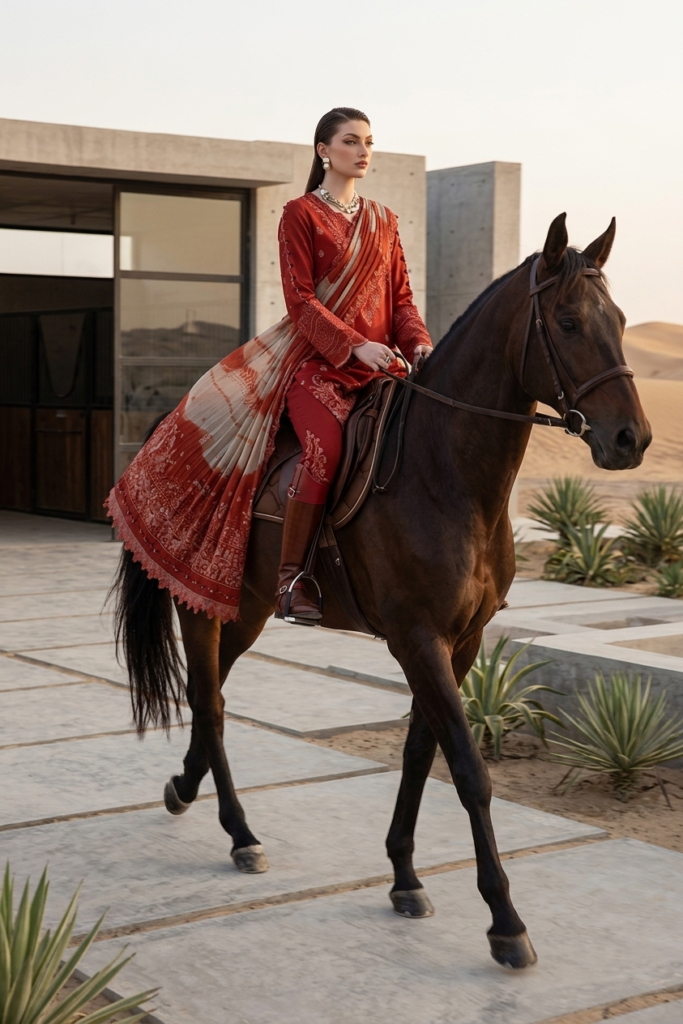
rust red embroidered designer karandi suit

Not every “Karandi” suit online is the real thing, and this is exactly where a lot of buyers get caught out.

  • Weave, Slub Texture and Weight Checks

Run the fabric between your fingers. Genuine Karandi feels noticeably thicker than lawn, with small slub bumps in the weave rather than a completely smooth, glassy finish. Hold it up to the light too. Less light should pass through than a lawn fabric of the same colour.

  • Reading Product Descriptions Correctly (Avoiding “Raw Silk” Mislabelling)

Look for listings that specifically name “Karandi” rather than vague terms like “winter fabric” or “raw silk suit.” As covered earlier, genuine Karandi is cotton-based, so a description that only mentions silk with no cotton at all is worth double-checking before you buy.

  • Verifying Original Tags and Packaging on Designer Karandi Suits

Original designer Karandi suits come with proper brand tags, serial codes, and sealed packaging. Cheap replicas usually skip these details entirely, or copy them poorly. If a seller can’t show you clear photos of tags and packaging, that’s a fair reason to walk away.

Because Karandi is frequently mislabelled or copied by unauthorised sellers, buying from a verified UK stockist matters more than people realise. Every Karandi suit at Zee Collections ships from our UK warehouse with the original tags intact, no customs duty, and no guesswork about what you’re actually getting.

Shop Verified Original Pakistani Suits

How to Care for Karandi Fabric

Karandi isn’t difficult to look after, but a few basic rules will keep it looking good for years.

Washing and Shrinkage Control

Pre-wash unstitched Karandi lengths in cool water before cutting or stitching, since this stabilises the fabric and reduces shrinkage later on. For finished suits, cool or lukewarm water with a mild, bleach-free detergent is the safest bet.

Dry Cleaning vs Hand Washing: When Each Applies

Heavily embroidered or formal Karandi pieces are usually best left to dry cleaning, especially if the embellishment includes delicate threadwork or beading. Plainer, less embellished Karandi suits can generally be hand washed or run through a gentle machine cycle without issue.

Ironing and Storage for Embroidered Pieces

Iron on a medium setting, ideally on the reverse side or through a pressing cloth, particularly on darker colours to avoid shine. For storage, fold heavy Karandi pieces rather than hanging them long-term, and keep tissue paper between embroidered sections to stop them catching on other fabric.

Where to Buy Original Karandi Suits in the UK

Sourcing authentic Pakistani fashion shouldn’t mean waiting weeks for overseas shipping or paying clearance taxes at your doorstep.

Zee Collections stocks 100% original designer Karandi suits that are dispatched directly from our UK warehouse with guaranteed authenticity, optional custom UK tailoring, and zero customs fees.

Conclusion

In short, Karandi is a medium-weight, cotton-rich winter textile designed for warmth, breathability, and structure. It sits right between light summer lawn and heavy winter wool, making it exceptionally well-suited for UK weather.

When shopping for designer Karandi suits, always verify the fabric composition, look for original brand packaging, and source from a trusted UK stockist like Zee Collections for guaranteed authenticity and zero customs hassle.

No more wondering whether your Karandi suit is genuine, or whether it’ll even turn up.

Shop 100% original Karandi suits from verified Pakistani designer brands, dispatched UK-wide with next-day delivery available at checkout.

Frequently Asked Questions

Is Karandi suitable for summer wear?

No. Karandi is strictly a winter/autumn fabric. Its dense weave and medium-to-heavy weight are designed to retain warmth, making it uncomfortable for hot weather

Because it contains natural cotton fibers, minor shrinkage can occur. Pre-soaking unstitched fabric in cold water before stitching easily prevents sizing issues later.

Raw silk is made entirely from silk filaments and has a natural luster. Karandi is a cotton-rich blended textile that mimics the textured look of raw silk while offering better breathability and structural durability.

Leave a Reply

Your email address will not be published. Required fields are marked *