How to Check the Fabric
This is where online replicas are often easier to spot. A photograph can copy the colour and pattern of a designer suit. Reproducing the same fabric quality is much harder.
Look at the Fabric Edge
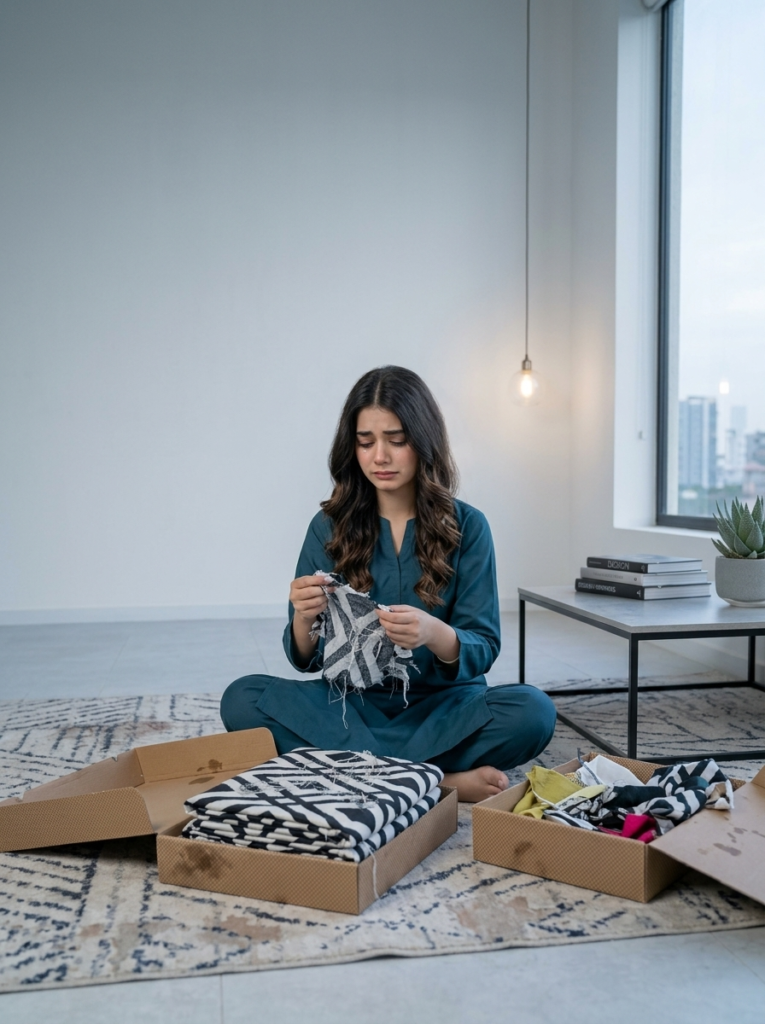
One of the checks we use when inspecting stock is the fabric edge. The edge, or selvedge area, lets us look closely at how the fabric has been woven. You can see the density and regularity of the threads more clearly there than through a heavily printed or embroidered section.
We check that the weave looks even and consistent and that the fabric feels right for the type stated by the designer.
We source our designer stock directly from the designers, but we still check the fabric thoroughly when it arrives. That extra inspection matters because genuine sourcing and proper quality control should go together.
What Genuine Lawn Should Feel Like
Good lawn should feel:
- light
- smooth
- breathable
- finely woven
- comfortable against the skin
Lightweight does not mean weak or paper-thin. The exact feel also varies between brands and collections, so there is no single thickness that proves authenticity.
What matters is whether the fabric matches what the designer has stated and whether the weave and finish feel consistent.
Chiffon, Organza and Silk
Different fabrics should naturally feel different. Chiffon should usually have a light, soft drape rather than feeling stiff and plastic-like. Organza is naturally crisper, so stiffness alone is not a sign of poor quality.
Silk and silk-blend fabrics can have a smoother finish and natural-looking sheen, depending on the composition. The important thing is not to judge every fabric using the same test.
Always compare it with the fabric description supplied for that particular design.
Check the Embroidery and Finishing
Embroidery is another area where cheaper copies often show their weaknesses.
Look closely at:
- threadwork
- borders
- motifs
- sequins
- beads
- embroidery backing
- cutwork
- loose threads
The embroidery should look consistent with the designer’s official photographs. Some unfinished threads around embroidered panels can be normal on unstitched fabric because the pieces still need to be cut and stitched by a tailor.
What you should be concerned about is obviously poor workmanship, missing embroidery, uneven motifs, or embellishments that do not match the original design.
Visible glue around sequins or decorations can also be a warning sign when the original design uses stitched embellishment.