Cold winters make it hard to stay warm without looking bulky. You want to look sharp for the occasion, but you also don’t want to be freezing by the time the evening is halfway through. Layering more clothes usually kills the outfit, and thin fabrics that look good rarely hold any real warmth.
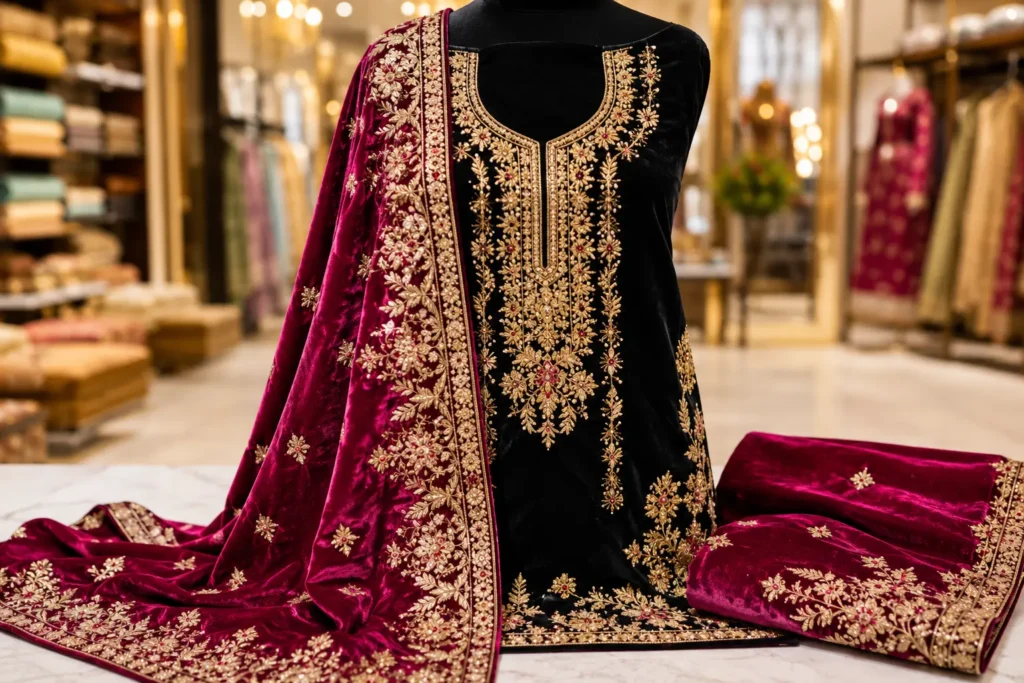
Is velvet fabric really the magic fix for winter fashion that gives you both premium elegance and cozy comfort? Here is the honest truth about what velvet actually is, how it performs in UK weather, and how to spot a genuine Pakistani velvet suit for women.
What Is Velvet Fabric and How Is It Made?
Velvet is a woven fabric with a short, dense pile that gives it that soft, slightly resistant feel when you run your hand across it. It is made on a special loom that weaves two layers of cloth at the same time, connected by an extra set of yarn looped over thin rods.
Once the weaving is done, those connecting threads are cut down the middle, which separates the two layers and leaves the cut ends standing upright as the pile. That upright pile is the entire reason velvet looks and feels the way it does, and it is also, as you will see in a moment, the reason it keeps you warm.
The fibre behind that pile can be almost anything. Velvet was originally woven from pure silk, which is still the most luxurious and the most expensive version, but most velvet sold today is cotton, polyester, rayon, or some blend of the three.
The fibre changes the price and the drape, but the double-layer, cut-pile construction is what makes it velvet regardless of what it is spun from. Pakistani designer collections tend to favour a silk-rayon or polyester-rich velvet, which keeps the fabric affordable enough for a full unstitched set while still giving it that rich, light-catching surface.