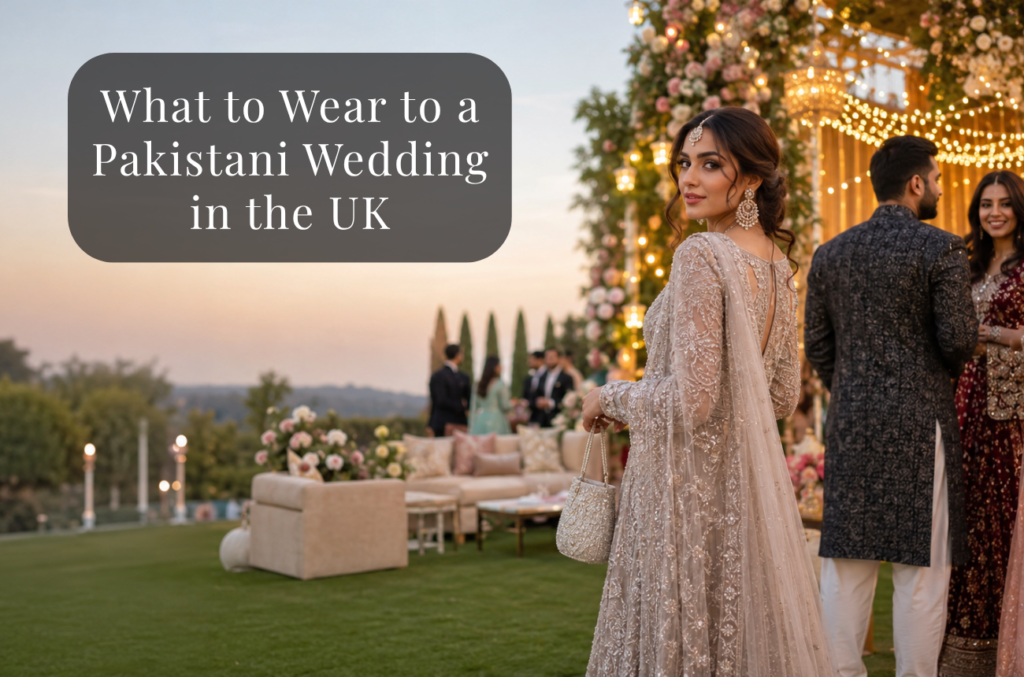
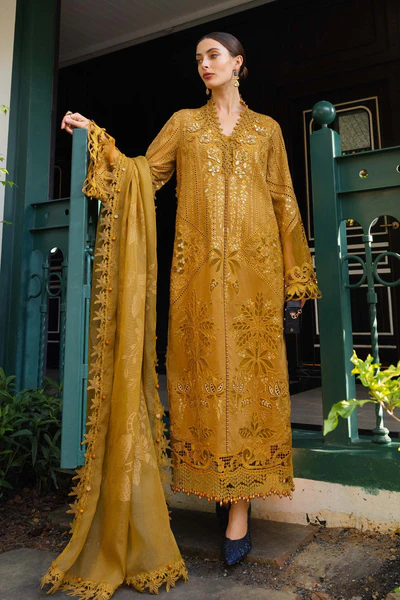
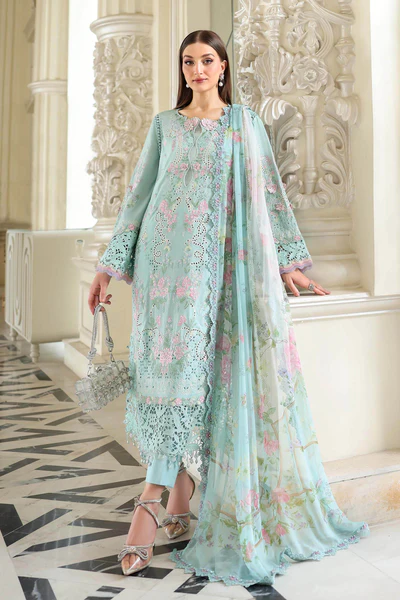
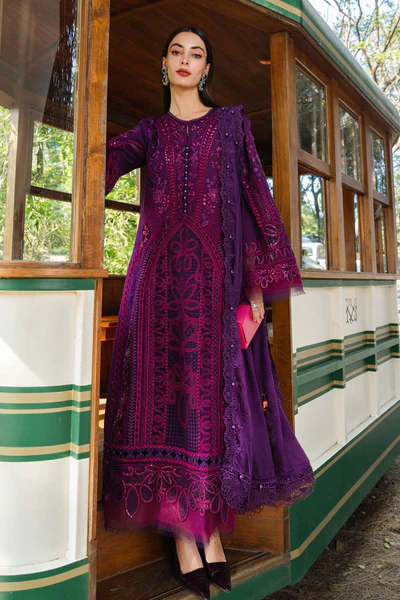
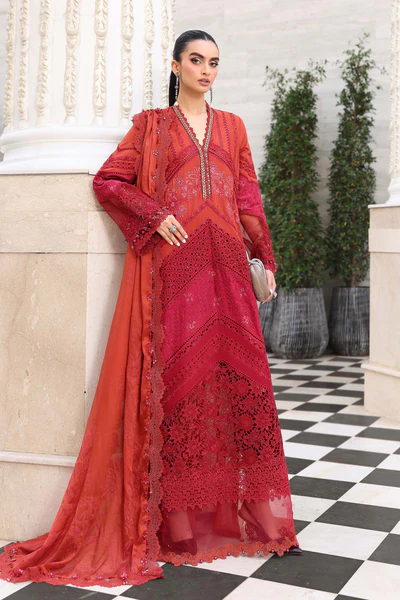
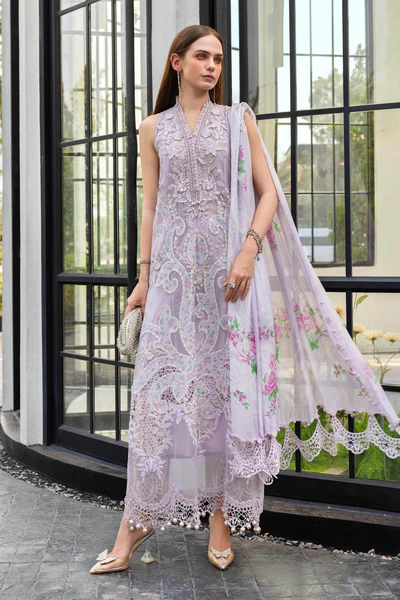
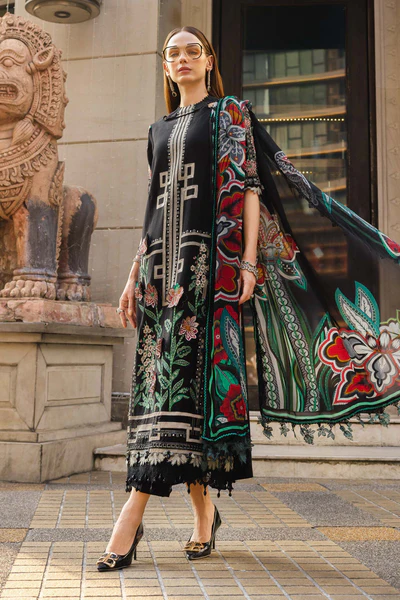
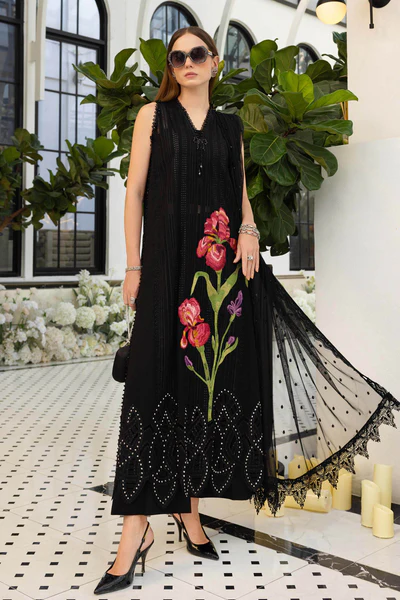
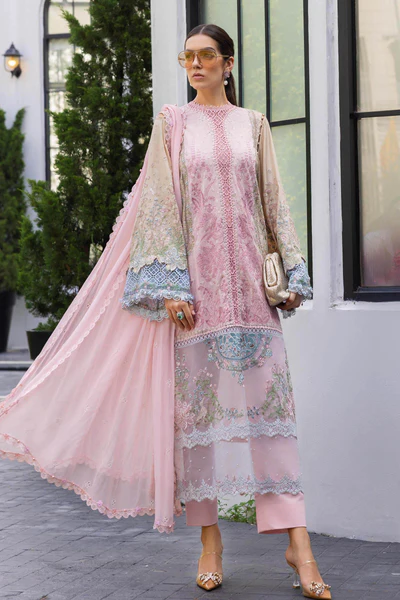
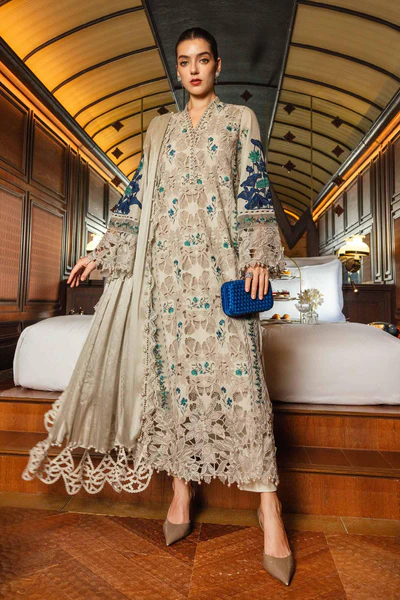
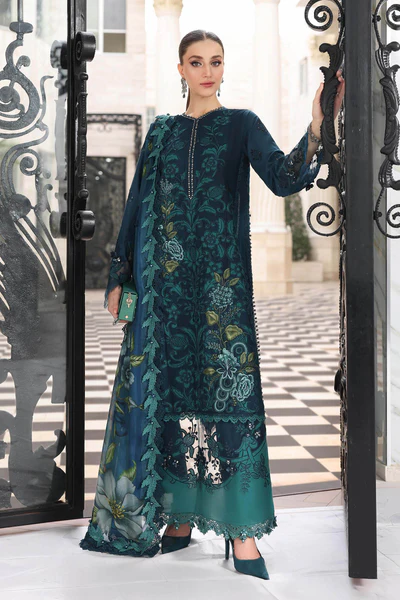
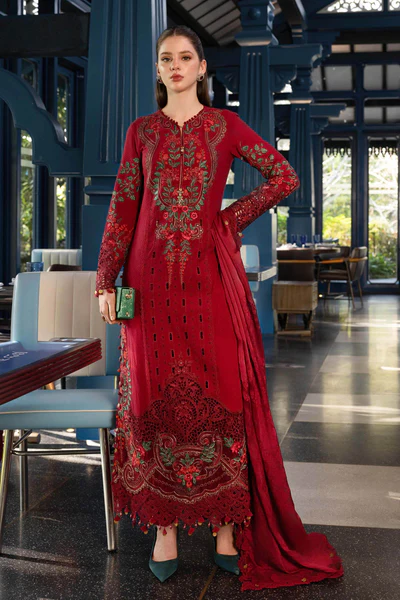
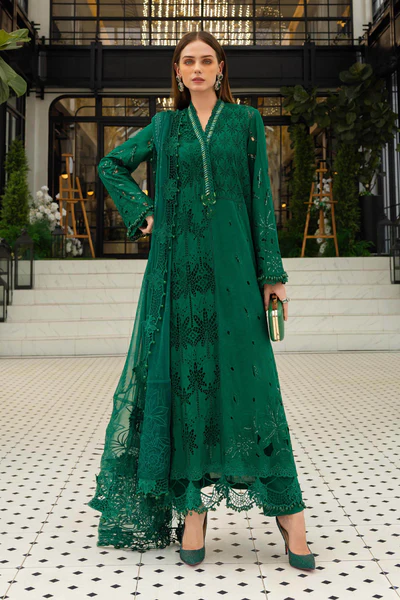
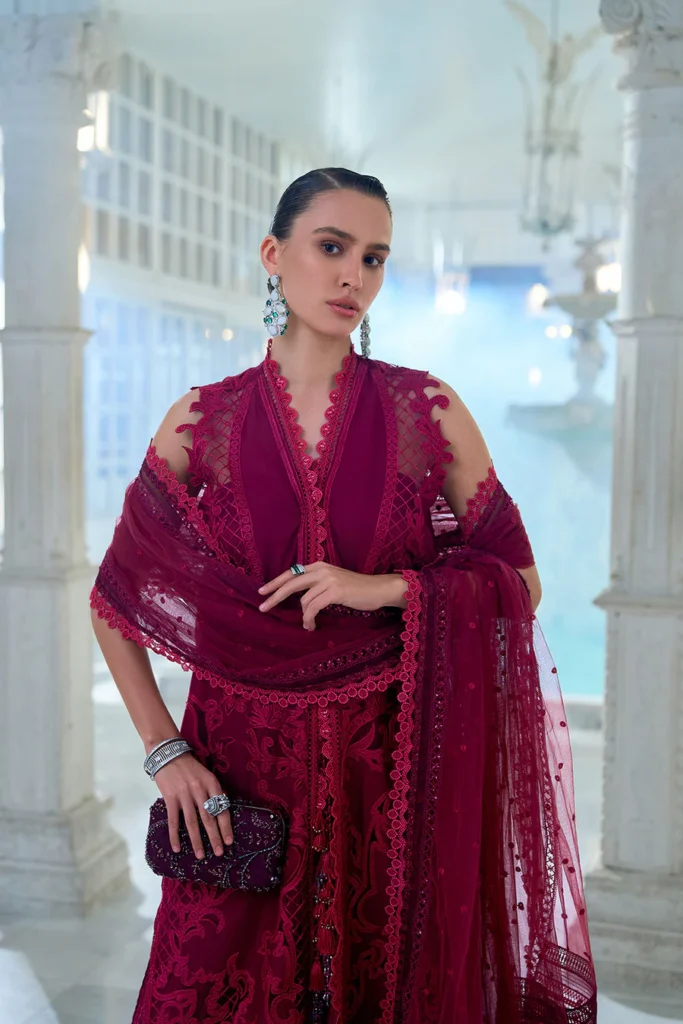
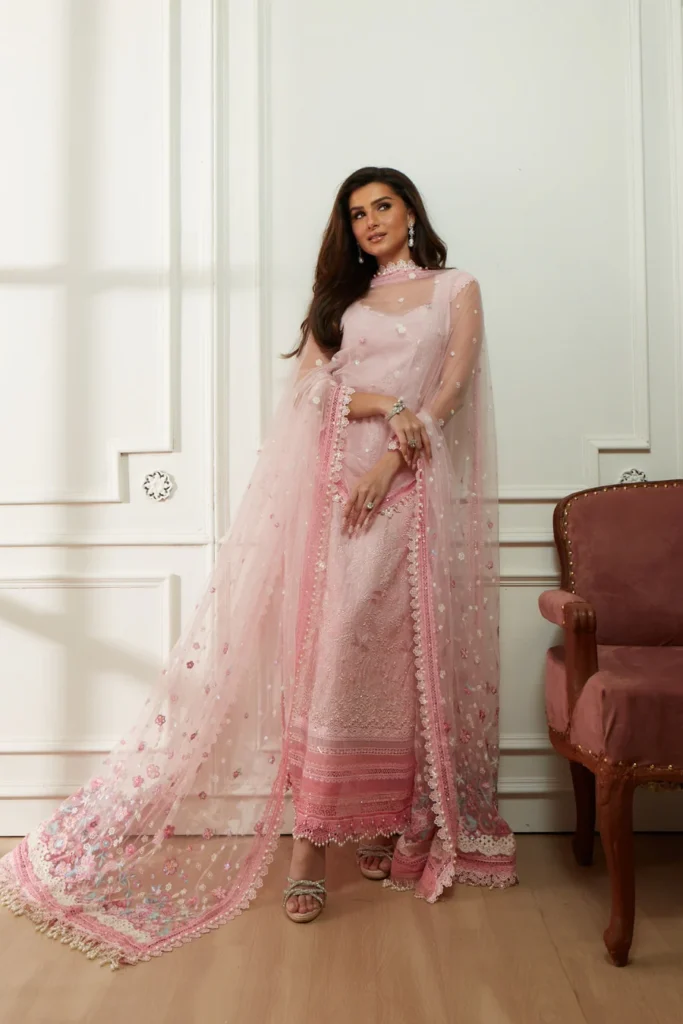
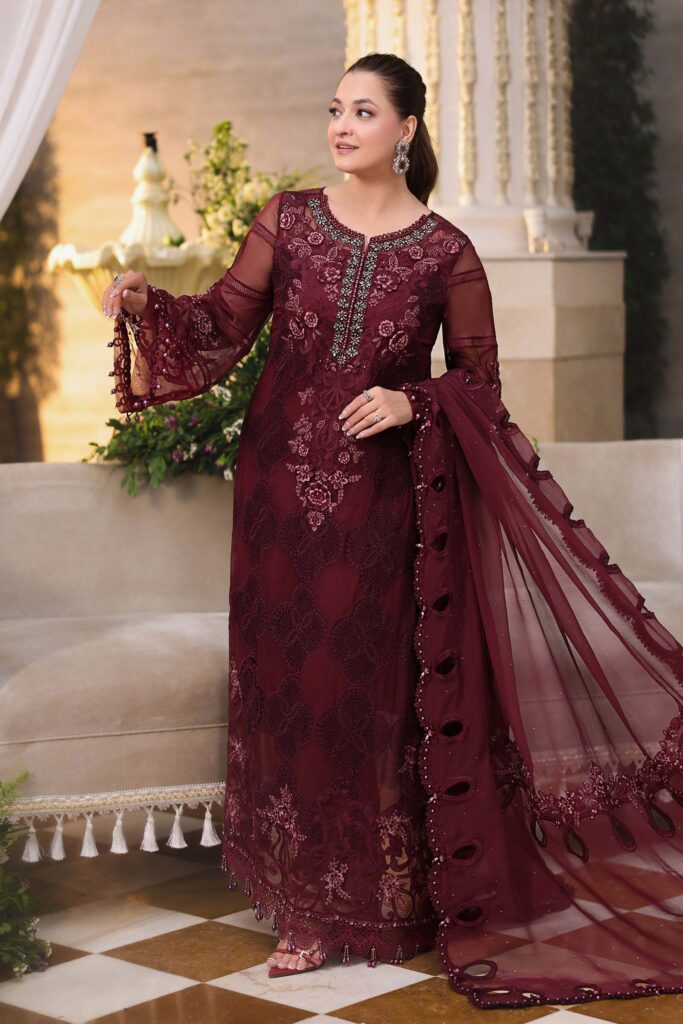
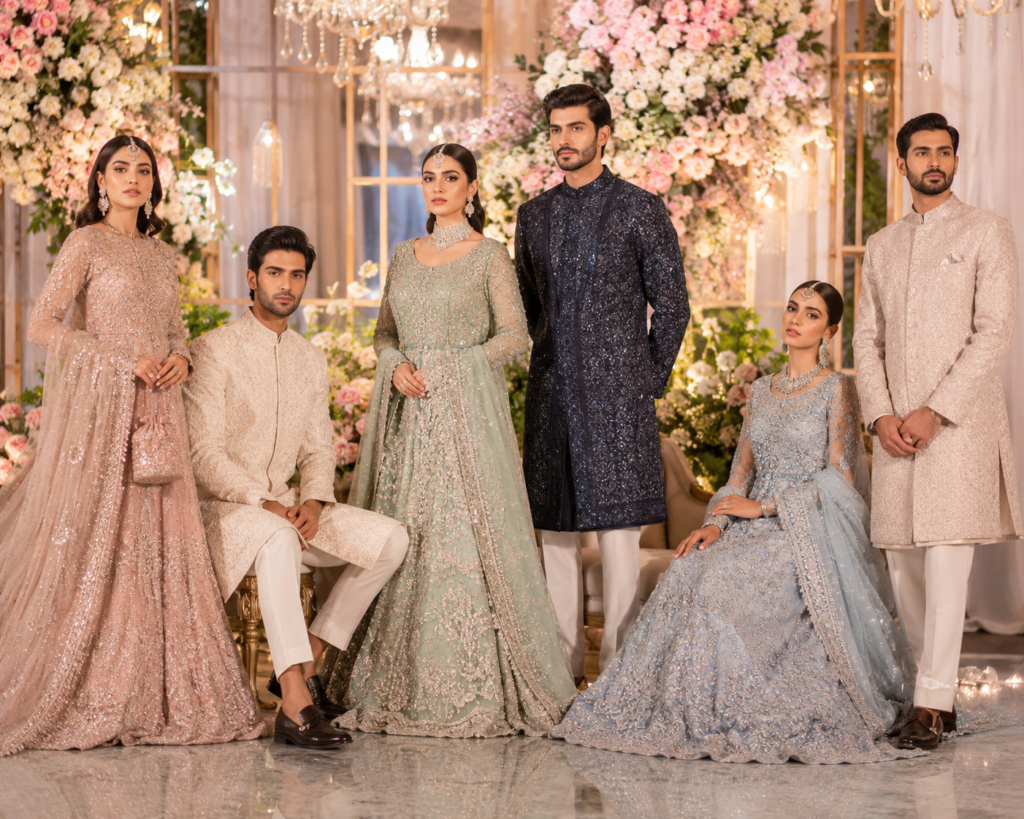
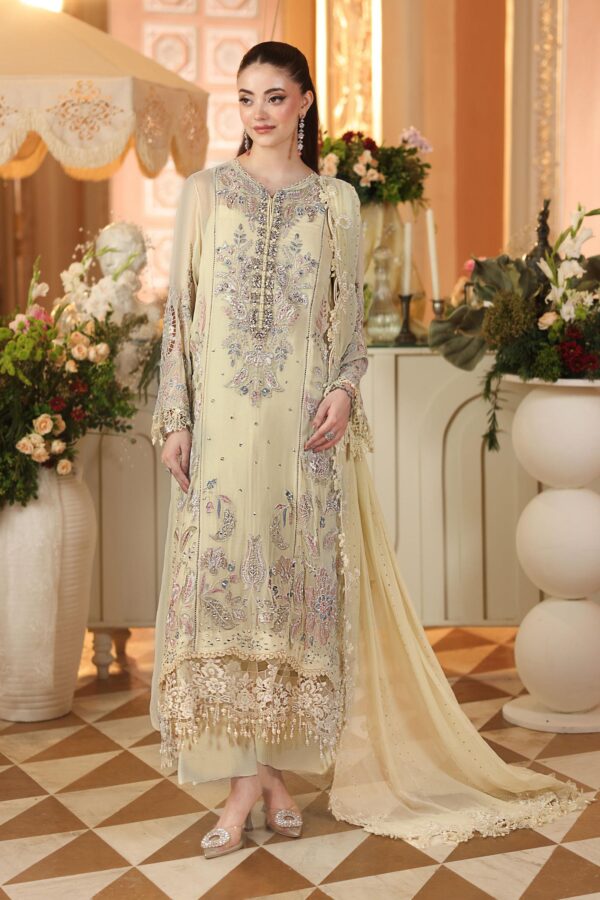
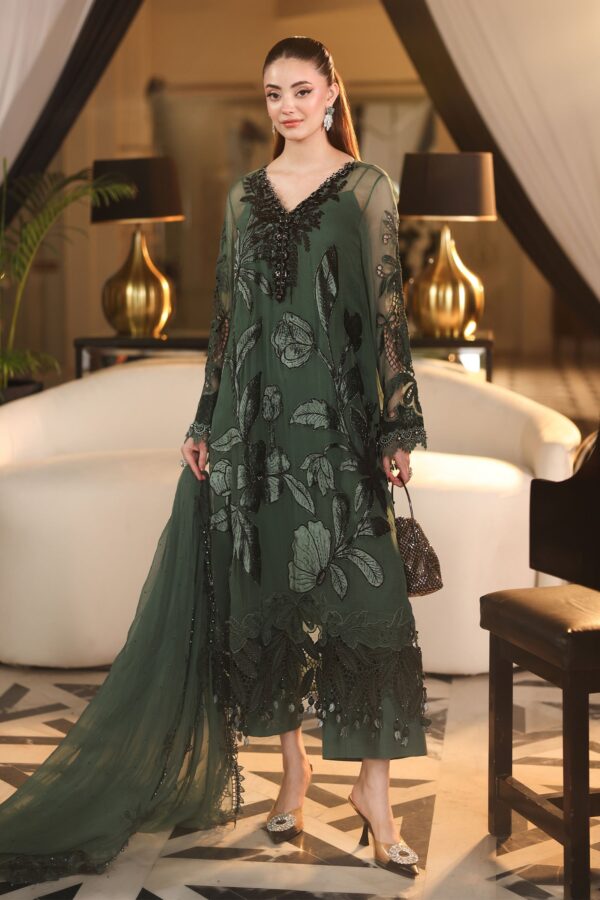
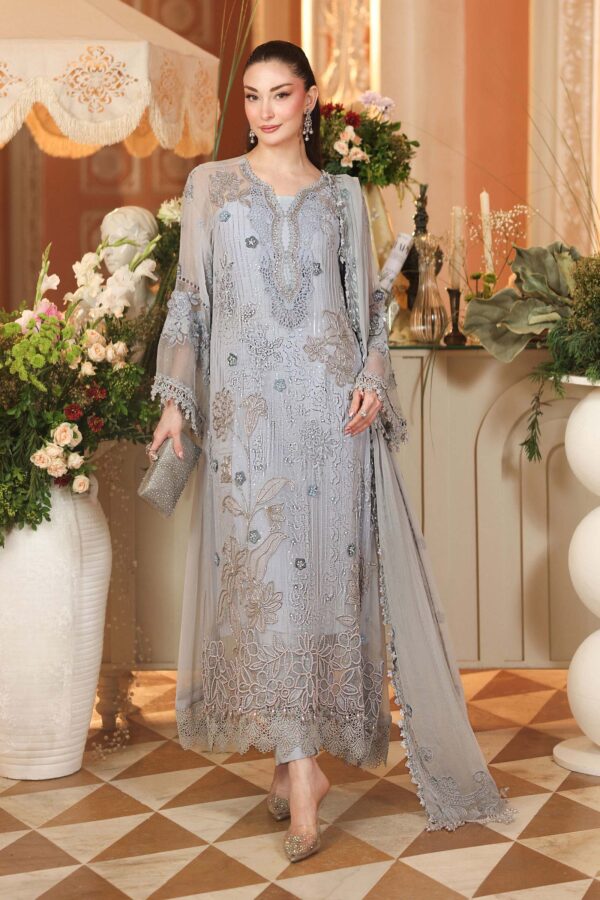
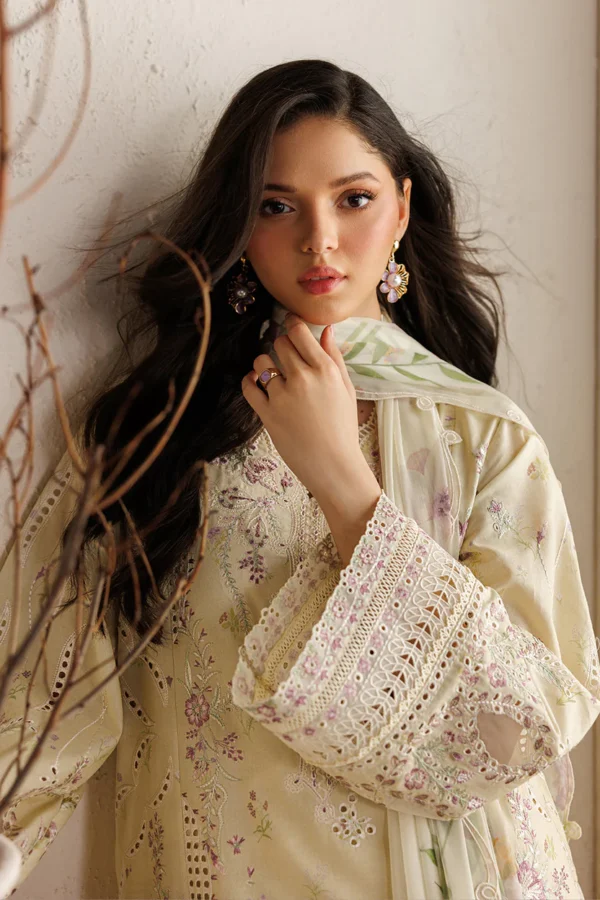
The mehndi is all colour and dancing. Yellows, mustard, greens, oranges, bright pink, and turquoise belong here, and you want fabric you can actually move in.
Yellow carries real meaning at a Mehndi, tied to the turmeric and henna traditions the event is built around, and it’s traditionally the bride’s own colour. Guests can still wear it, most UK Pakistani families are relaxed about this, but if you know the bride is wearing yellow, a complementary shade like mustard, orange, or peach is the more considerate choice.
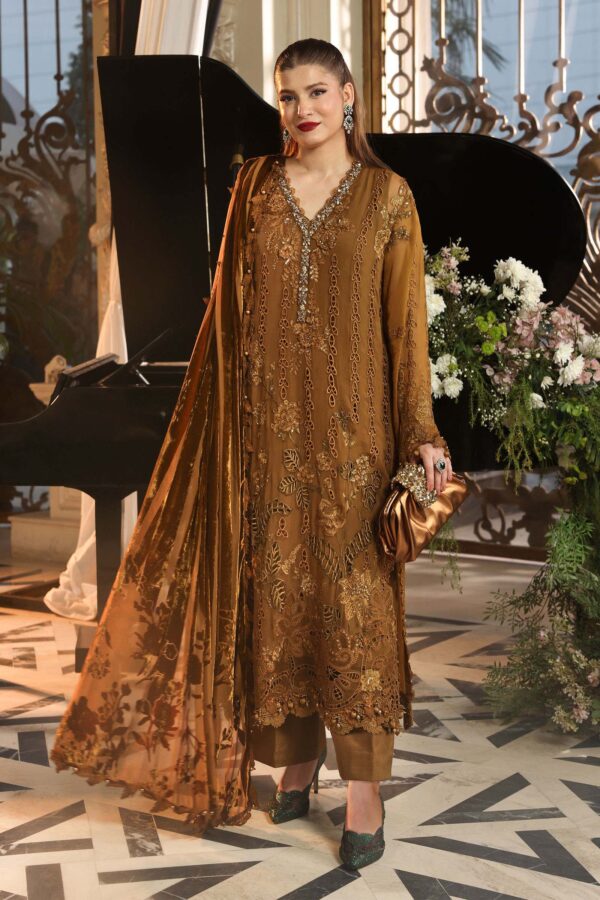
Fabric matters more here than at almost any other event, and not just for looks. Mehndi involves a lot of sitting on the floor or on cushions during the henna application itself, so stiff silks and anything with sharp mirror work, loose sequins or heavy metal embellishment can genuinely be uncomfortable, and heavy dupattas risk getting stained. Light, gota, and mirror work photograph beautifully under the lights, which matters when half the night ends up on someone’s phone.
Keep jewellery lighter than you would for a Baraat, floral bangles, jhumkas or a simple gajra hairpiece all suit the mood, and hair worn loose or in a relaxed braid fits the informal energy better than an elaborate updo. If you’re not sure how far to go, pick one hero element, a statement dupatta or bold jewellery, not both, and keep everything else simple.
One more thing worth knowing if you’re in the UK: many Mehndis are now held at rented venues rather than at home, which has nudged the dress code up slightly from purely casual. Save your everyday lawn prints for a Dholki, and lean into embroidered or embellished lawn and chiffon for a venue Mehndi.