7 Ways to Style Pakistani Woolen Shawls for Everyday UK Outfits

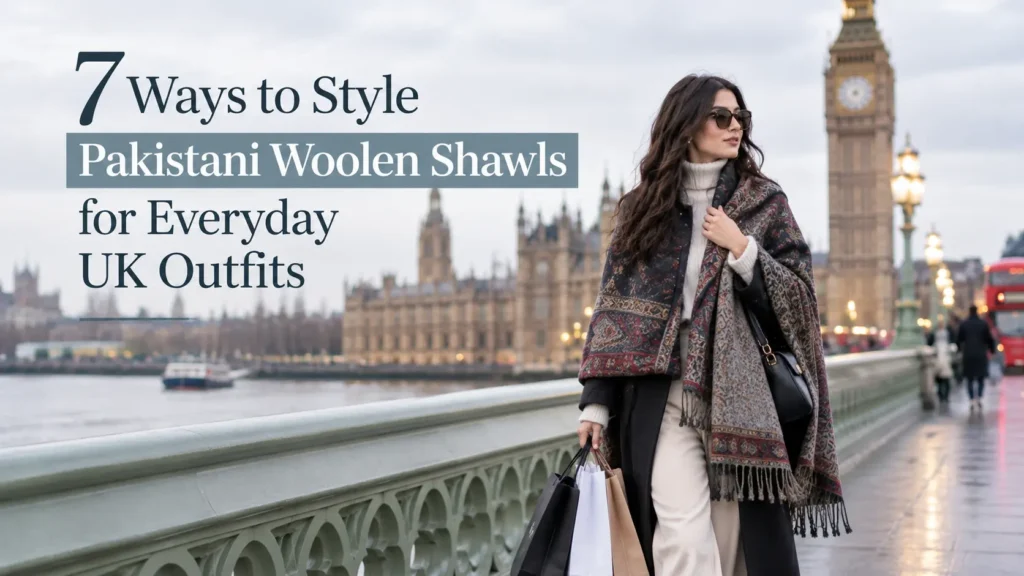
7 Ways to Style Pakistani Woolen Shawls for Everyday UK Outfits

An authentic Pakistani woolen shawl is one of the most versatile pieces you can own for the British winter. Whether you’re stepping out into damp 5°C weather or heading into a centrally heated office, a well-draped shawl gives you instant warmth while pulling your entire outfit together. The real secret lies in knowing how to style it naturally with both traditional 3-piece Pakistani suits and modern everyday Western coats.

Most people own a beautiful shawl and still wear it the same one or two ways every winter, usually just thrown over both shoulders regardless of where they’re actually going. That’s a missed opportunity, because the right drape can make the same shawl work for a school run, an office day, and a wedding dawat without you needing to own three different pieces.

This guide walks through all seven, plus exactly which one to reach for depending on your day, and you’ll find the full range of suits that come with a matching shawl on at Zee Collections.

7 Easy Ways to Style Your Woolen Shawl

Each of these seven styles solves a different UK-weather problem, from a freezing commute to a centrally heated wedding hall, so pick the one that matches your day rather than your mood.

Style 1: The Classic Both-Shoulder Wrap

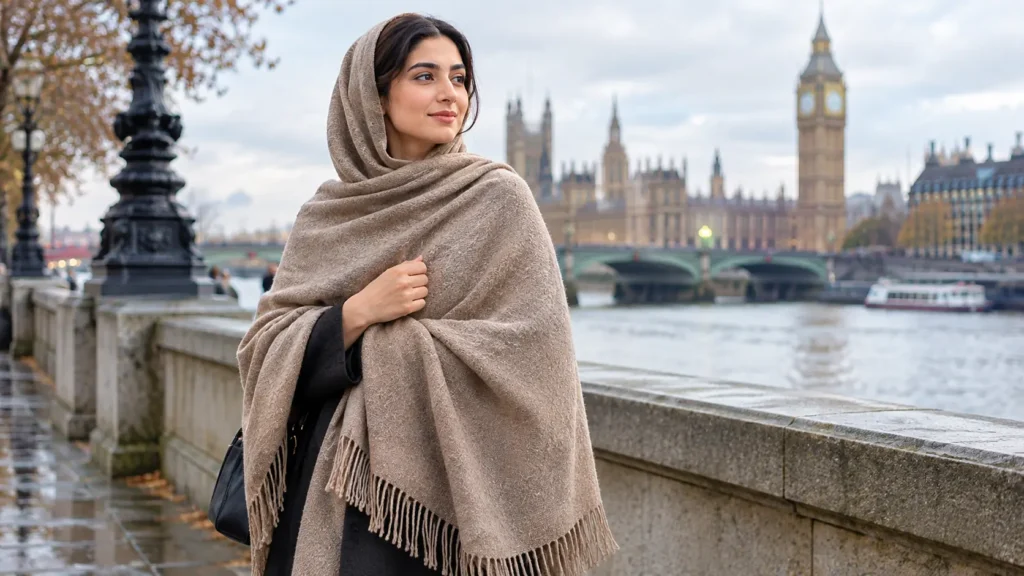
When the British winter turns genuinely cold, the double shoulder wrap is your best defence against freezing winds. Wrap the shawl fully around your upper body, resting equal lengths over both shoulders. This drape completely covers your chest and arms, making it ideal for outdoor errands, morning school runs, or standing at drafty train stations.

If you’re wearing a plain khaddar or karandi suit, a heavy pashmina or woven wool shawl wrapped this way becomes the main highlight of your outfit.

If you’re not sure which one you’re wearing, our karandi fabric guide explains exactly what to look for.

Woman wearing a beige woolen shawl in a classic both-shoulder wrap on a cold London day, showing a warm and elegant styling idea for UK winter weather.

Style 2: The One-Arm Formal Drape

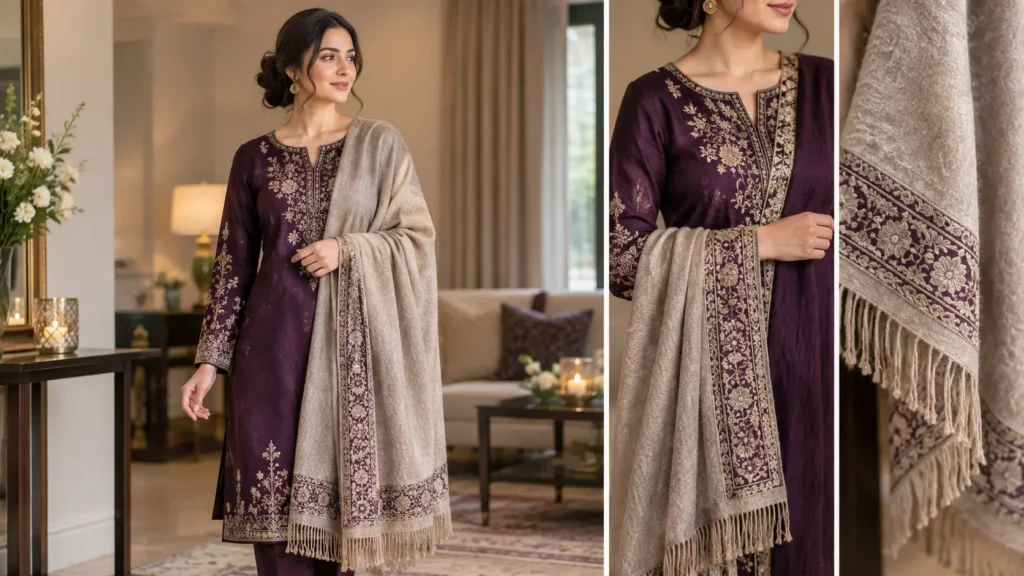
If you’ve spent time choosing an unstitched suit with detailed chest or sleeve embroidery, you don’t want to cover it all up. Fold the shawl in half lengthways and drape it over one arm, letting the heavy embroidered borders hang down.

This asymmetrical look adds instant elegance for indoor dawats, family dinners, or festive gatherings where central heating keeps the room warm, letting you show off your kameez while keeping a warm layer close by.

Tired of Heavy Jackets Ruining Your Pakistani Outfits?

Don’t hide your kameez embroidery under bulky coats. Our winter suits come with matching shawls designed to layer properly, not fight your outfit.

One Arm Formal Shawl Drape

Style 3: The Front Cross Chest Wrap

Cross the shawl across your chest and toss one long end loosely over your opposite shoulder. This creates a cosy, layered drape that protects your neck and chest area without feeling restrictive.

It works exceptionally well over a straight-cut viscose or marina kameez, as well as casual Western knits. The crossover holds body heat in while giving you a relaxed, effortless everyday look.

Style 4: The Western Coat Scarf Drape

You don’t have to limit your Pakistani shawls to ethnic wear. Fold a woven pashmina lengthways into a long band, drape it around your neck, and let the ends fall flat down the front inside an open wool trench coat or structured blazer.

This introduces a subtle pop of traditional pattern and texture to an everyday UK office outfit (a plain turtleneck, tailored trousers and leather boots, for example) without looking overly formal.

Style 5: The Belted Kameez Look (Handsfree Styling)

One of the biggest struggles during a busy UK day is keeping a heavy shawl from constantly sliding off your shoulders. Drape the shawl evenly over both shoulders so it hangs straight down your front, then cinch a thin leather belt around your natural waist over both the kameez and the shawl.

This instantly turns your shawl into a structured, poncho-style layer. It defines your waist, prevents bulk, and keeps your hands completely free while walking or shopping.

Attending a Winter Wedding or Festive Evening Dawat?

Thin chiffon dupattas won’t protect you from freezing UK night temperatures. Upgrade your evening look with our velvet suits, complete with matching palachi velvet shawls built for warmth and evening elegance.

Style 6: The Asymmetrical Single Shoulder Pin

Drape the majority of the shawl over your left shoulder, letting the patterned border cascade down your back, and secure it at the shoulder seam using a small, decorative brooch or a hidden safety pin.

This handsfree drape gives you a neat, polished look while leaving your right arm completely unrestricted. It’s a great option for hosting guests at home or attending casual weekend lunches.

Style 7: The Casual Hood Wrap

On bitterly cold or drizzly winter afternoons, pull the top back edge of your shawl slightly over the crown of your head to act as a soft hood, then wrap the loose ends around your neck.

This classic technique shields your hair and ears from sudden British gusts of wind without needing a separate wool beanie, blending practical winter protection with a timeless look.

How to Choose the Right Shawl Drape for Every Occasion in the UK

Choosing how to wear your shawl depends entirely on where you’re going and what the British weather is doing. Here’s how to quickly pick the right drape style based on your daily plans.

For Office and Professional Work Days

Recommended drape: Style 4 (Western Coat Scarf Drape).

How to wear it: fold a fine pashmina or woven wool shawl lengthways and tuck it neatly inside an open tailored blazer, trench coat, or longline wool jacket.

Why it works: it gives a sharp, professional Western appearance while adding a subtle pop of ethnic pattern and colour. It keeps your neck warm during the morning commute without looking overly formal once you’re inside the office.

Browse our formal collection for suits with enough structure to carry this drape well.

For Parties, Dawats and Winter Weddings

Recommended drape: Style 2 (One-Arm Formal Drape).

How to wear it: fold the shawl in half lengthwise and drape it lightly over one arm, letting the embroidered border or palu hang down.

Why it works: centrally heated indoor event venues already keep you warm, so you don’t need a full wrap. This drape keeps your kameez chest embroidery and sleeve work fully visible, while keeping a warm velvet or pashmina layer ready on your arm the moment you step back outside.

For the full formal edit, see our wedding collection, or read our guide on what to wear to a Pakistani wedding in the UK for more.

For Handsfree Commutes and Shopping Trips

Recommended drape: Style 5 (Belted Kameez) or Style 6 (Single Shoulder Pin).

How to wear it: cinch a thin leather belt over the shawl at your waist, or use a small decorative brooch to pin the fabric securely at your left shoulder seam.

Why it works: walking through UK high streets or carrying shopping bags means you need your hands free. Both styles lock the heavy fabric in place so it never slips off your shoulders, even while you’re moving around.

For Freezing Outdoor Days and Windy Weather

Recommended drape: Style 1 (Classic Double Wrap) or Style 7 (Casual Hood Wrap).

How to wear it: wrap the shawl fully around both shoulders to cover your entire upper body, or pull the top edge slightly over the back of your head to shield your ears from cold gusts.

Why it works: when UK winter temperatures drop below 5°C, maximum coverage is essential. Wrapping your core and head traps body heat instantly and blocks damp UK wind from cutting through your suit layers underneath.

How to Style Your Shawl as a Modest Head Wrap

A Pakistani woolen shawl works just as well as a modest head covering as it does draped over the shoulders, and for many women it’s the more practical choice through a UK winter, since it gives you warmth and coverage in one piece rather than needing a separate hijab underneath a coat hood.

How to wear it: centre the shawl over the crown of your head so both sides fall evenly, then bring one side across and secure it either at your temple or under your chin, depending on how much coverage you want. Let the remaining length fall over one or both shoulders rather than tucking it away, so it still reads as part of the outfit instead of a separate layer bolted on top.

Keeping it secure in UK wind: a small pin at the temple or under the chin makes the difference between a wrap that holds through a windy high street and one you’re readjusting every few minutes. This is worth doing properly rather than leaving it loose, since British wind is a lot less forgiving than a still indoor room.

Fabric choice matters here: reach for a lighter pashmina rather than a heavy woven wool shawl for this style. A finer fabric wraps close to the head without adding bulk or weight, and it’s easier to pin securely than a thick, stiff weave.

When to wear it: This works for daily wear, for Jummah, or as your main head covering on the coldest days, worn either on its own or underneath a coat hood for extra protection against rain and wind. It also means you’re not choosing between staying warm and staying covered, the one shawl does both.


Choosing the Right Pakistani Winter Shawl Fabric

Selecting the right fabric density keeps you comfortably warm outside without overheating inside.

Pashmina shawls: made from fine, soft wool fibres that trap heat efficiently without adding heavy weight. Perfect for everyday casual wear, school runs, and layering under coats.

Woven woolen shawls: dense, textured shawls with sturdy weaves built specifically to block sharp outdoor winds during long commutes.

Palachi velvet shawls: heavyweight, luxurious shawls featuring burnout or embroidered velvet details. Best reserved for winter weddings, formal dawats, and evening events.

For more on why velvet works so well for this season, our guide to velvet fabric for winter covers it in full.

Viscose and wool blends: lightweight, soft, and easy to care for. Ideal for indoor family gatherings and centrally heated spaces.

How to Match Shawls with Pakistani Suits and Western Outfits

Balancing prints and embroidery: pair heavily embroidered or patterned shawls with simple, solid-coloured suits. If your kameez features busy all-over prints, choose a plain or subtle border shawl instead, to keep the outfit visually balanced.

Western fusion styling: a plain monochrome outfit, a black turtleneck knit and straight-leg denim, for example, gives a vibrant Pakistani jamawar or pashmina shawl the perfect backdrop to stand out.

Smart colour rules: deep winter shades like navy, emerald, deep burgundy and chocolate brown pair naturally together. For a fresh daytime look, pair a cream or camel coat with a contrasting jewel-toned shawl.

If you’re building a full wedding-season outfit around one of these shawls, our guide to velvet for UK weddings walks through how to pick the suit fabric to match.

How to Wear Heavy Shawls Without Looking Bulky

Start with a thin thermal base: wear a snug, long-sleeve thermal top and fleece-lined leggings under your kameez and trousers. This gives you hidden insulation so you don’t need thick jumpers under your suit.

Stick to one statement layer: let your shawl be the single main focal piece of your outfit rather than piling on cardigans and oversized jackets at the same time.

Use hidden anchor pins: secure heavy wool or velvet shawls to your suit’s shoulder seams using small safety pins attached from the inside. This stops constant readjusting and keeps the drape neat.

One more thing worth remembering: a genuinely heavy shawl only looks bulky when it’s fighting your suit’s own shape. A structured kameez with some weight to it, khaddar or karandi again, carries a heavy shawl far better than a very soft, flowing lawn piece will, since the suit itself holds a line underneath the extra fabric instead of collapsing under it.

Browse our karandi collection if that’s the structure you’re after.

Frequently Asked Questions

Can I wear a Pakistani woolen shawl with a Western coat?

Yes. Fold it lengthways as a scarf inside a wool trench coat, or wrap it over a blazer for a stylish fusion look.

Natural pashmina wool gives high thermal insulation relative to its weight, making it exceptionally warm for UK winter temperatures between 5°C and 12°C.

Attach a small safety pin from the inside of your garment, straight through the shoulder seam into the inner lining of the shawl.

A heavy palachi or embroidered velvet shawl gives you the best combination of formal luxury and heavy insulation against freezing evening temperatures.

Yes, the fabric usually can, a good pashmina or wool shawl is versatile enough for both, it’s the drape that needs to change. Fold it in as a scarf for the office (Style 4), then switch to draping it over one arm the moment you’re at an evening event (Style 2).

Conclusion

Mastering how to style a Pakistani woolen shawl lets you stay warm, comfortable, and put together throughout the British winter. By choosing the right fabric weight, using handsfree draping techniques, and balancing your layers, you can pair your shawl with both your unstitched suits and your everyday Western wardrobe without effort.

The shawl itself rarely needs to change from one occasion to the next, what changes is how you wear it. Learn the seven drapes once, match them to your day using the guide above, and you’ll get far more use out of a single shawl than most people ever do out of three.

Leave a Reply

Your email address will not be published. Required fields are marked *